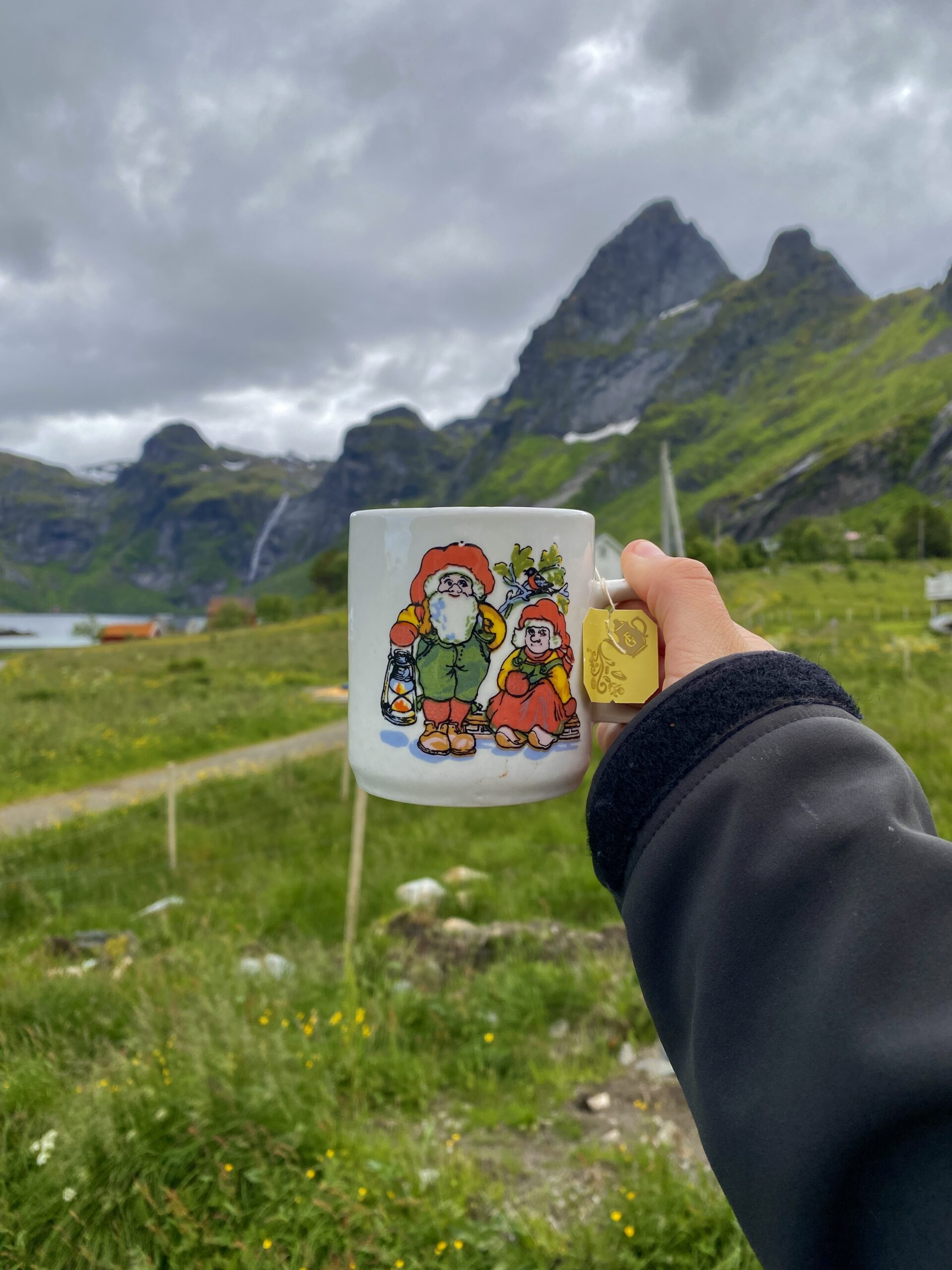
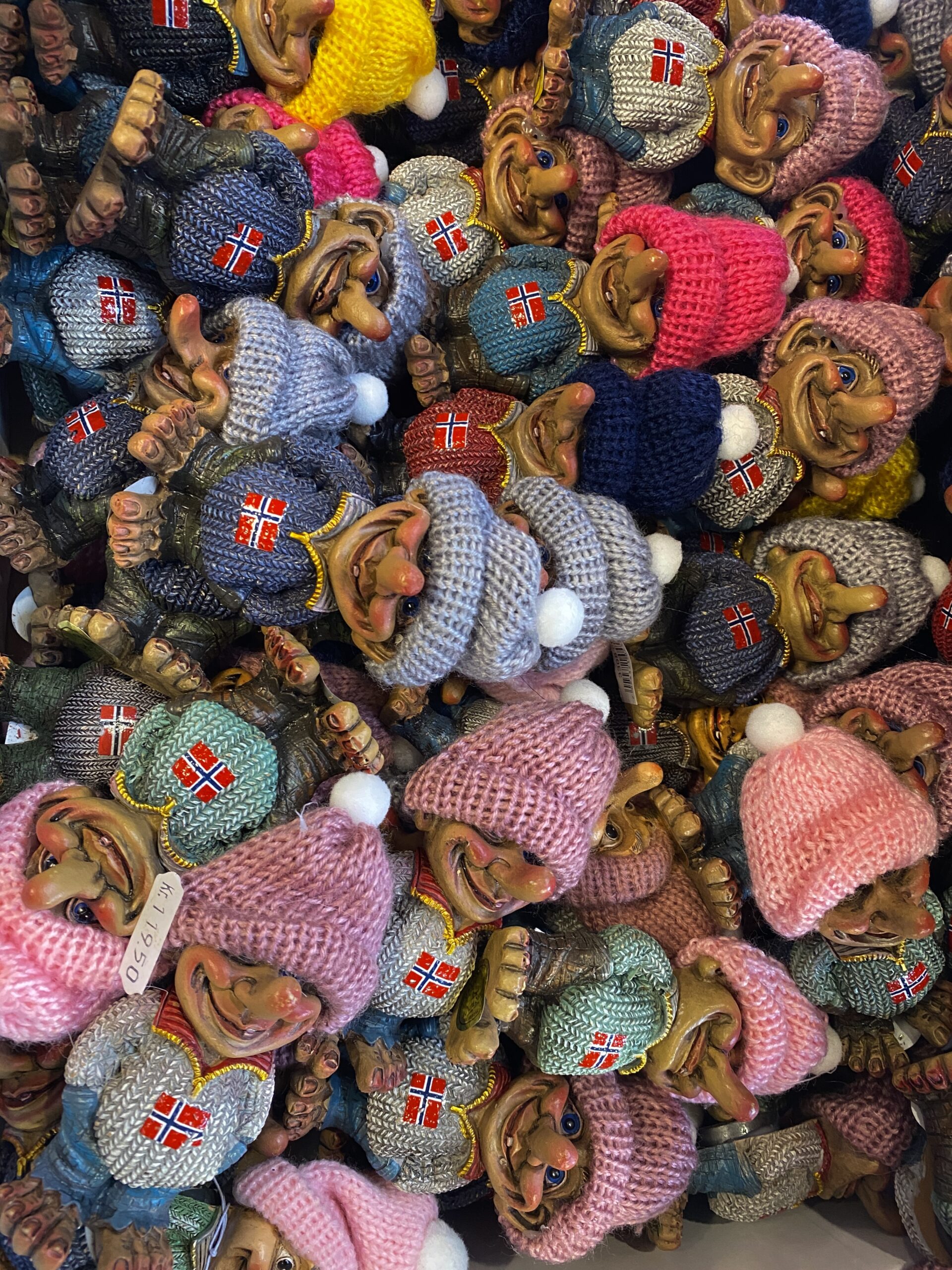
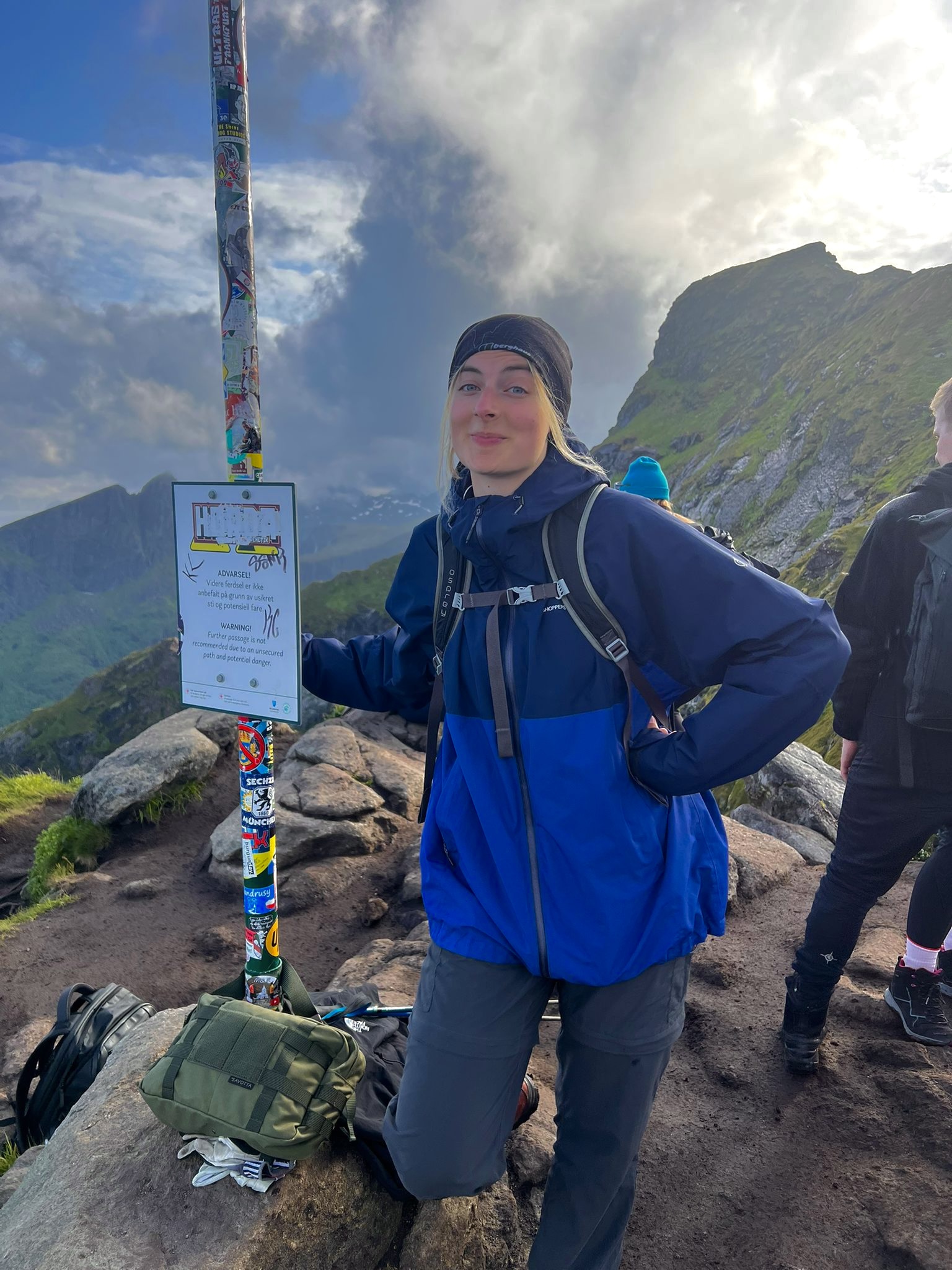
Norway added a unique piece to my puzzle of the world.
June 2025.
1. The relationship between travel and being open-minded.
Habitually, whenever I visit a new country, I liken it to somewhere I already have already been and understand.
“This feels similar to…”
“That reminds me of…”
Over these 2 weeks away I found myself comparing Norway to Scotland, New Zealand, Iceland, and probably more places left unremembered. Each time, I’d draw parallels: the fjords reminded me of Milford Sound, the lush green hills and lakes echoed photos I’ve seen of the Highlands, the Nordic air and coloured cabins felt like Iceland’s. But no matter how many comparisons I made, I always came back to the same conclusion – Norway is utterly unique. It’s become a kind of anchor in my mind. I know that wherever I go next, I’ll measure it against this place, just as I did with the ones before. I believe this is a never-ending cycle which won’t ever stop. I’ll never see everything, but maybe that’s the point. Each time I travel I get to put a new piece into my never-ending puzzle of the world.
I think this is part of the reason why people who travel often come across as more open-minded, they’ve seen so many different versions of “normal” that their idea of reality becomes more flexible, they simply have more pieces in their puzzle. That’s what fascinates me most visiting new places: no two are ever the same, and as a result I can feel my perception widening. At times it has felt like I can feel my brain stretching, I’m not just seeing new things, but I’m also adapting to them, and letting them reshape how I understand the world. This concept might sound extremely abstract to some people, but that’s okay.
2. Back to the adventure...
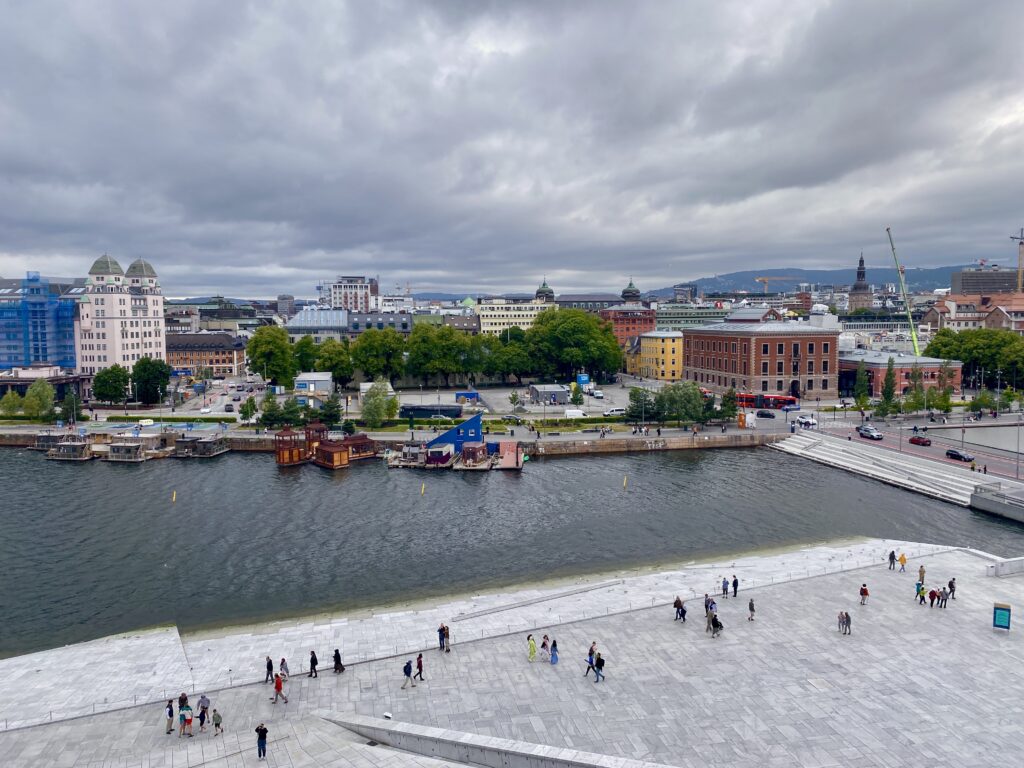
After two days exploring the capital city of Oslo, we flew up to the Lofoten Islands – this is where our journey really began.
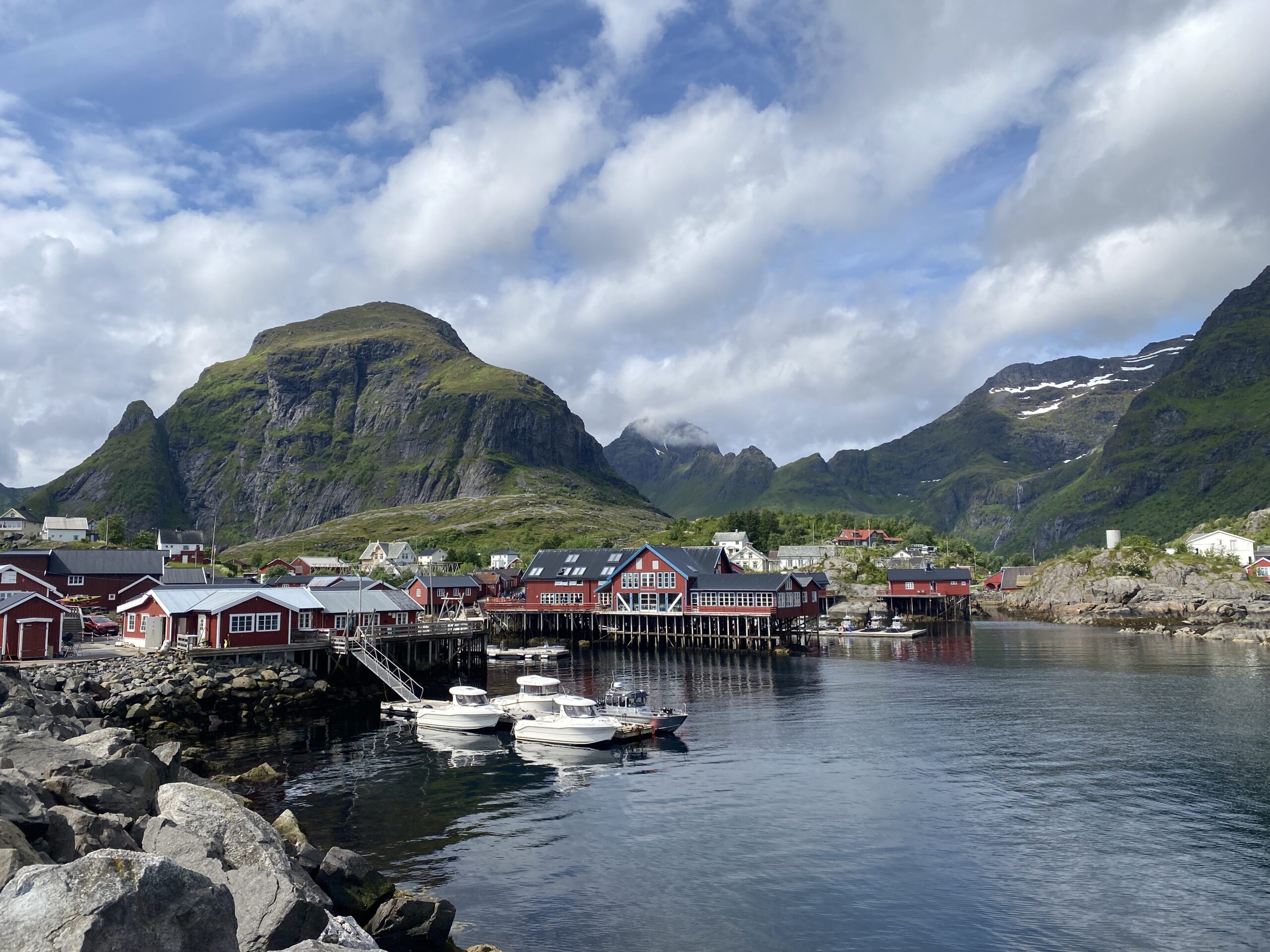
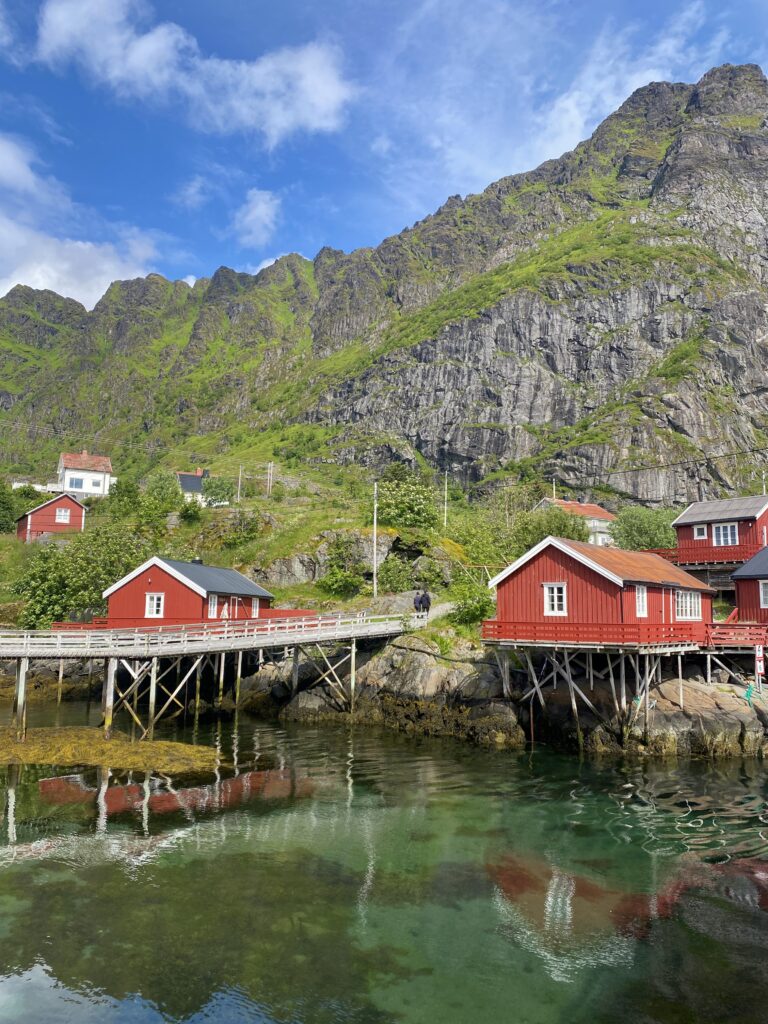
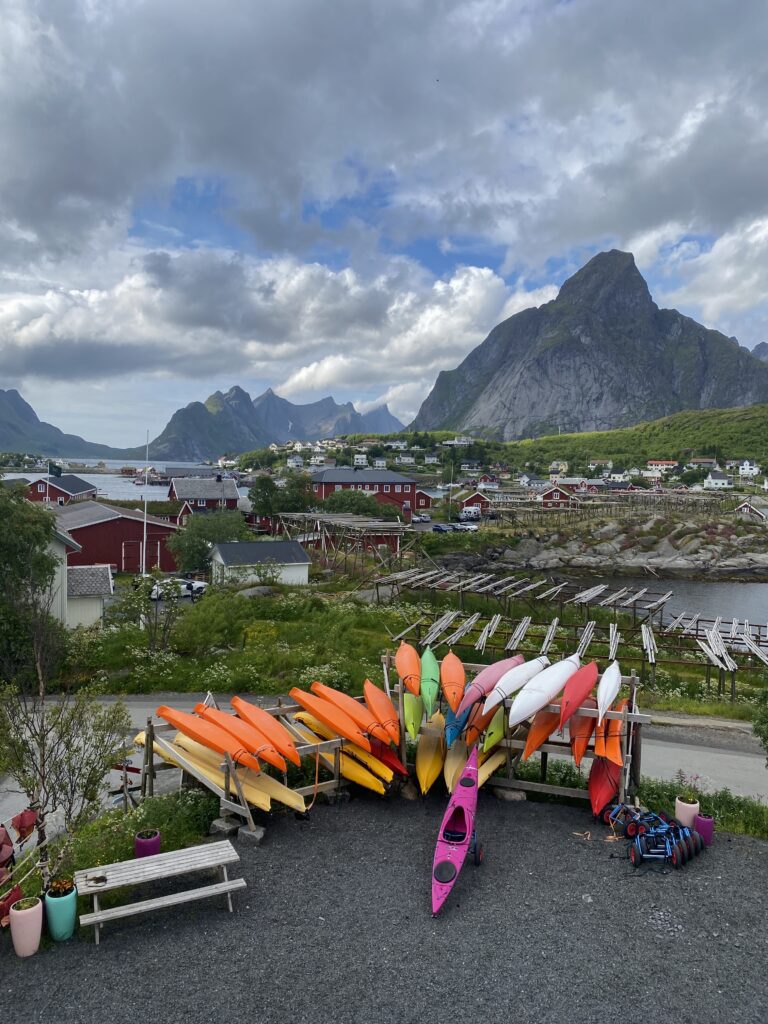
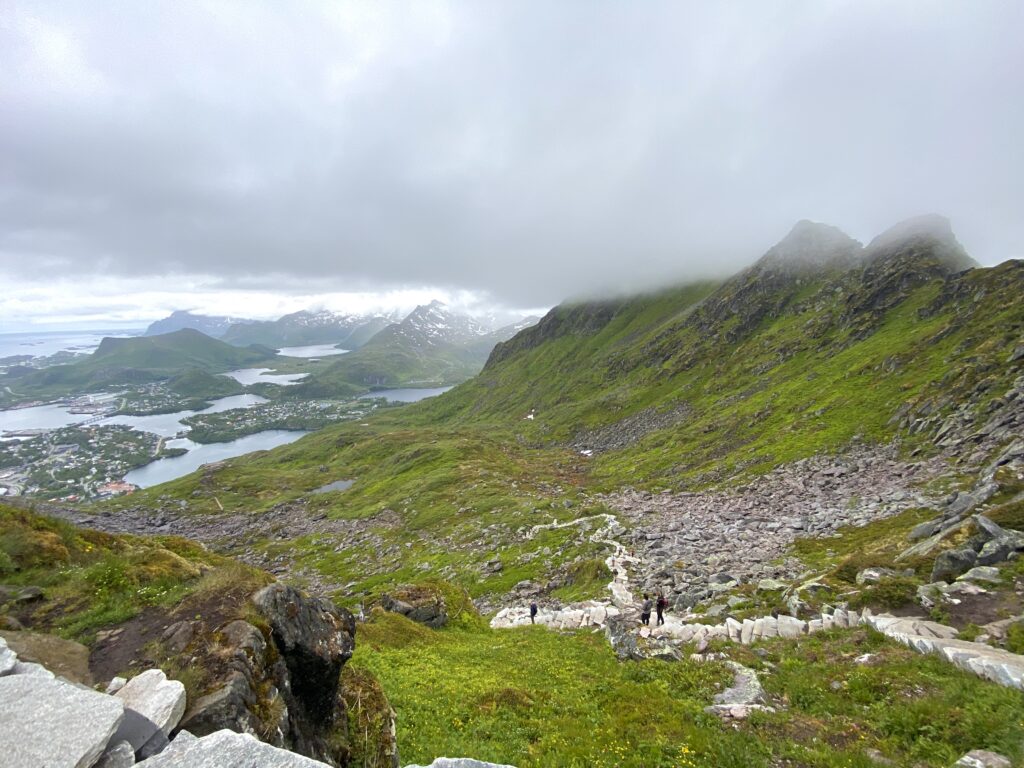
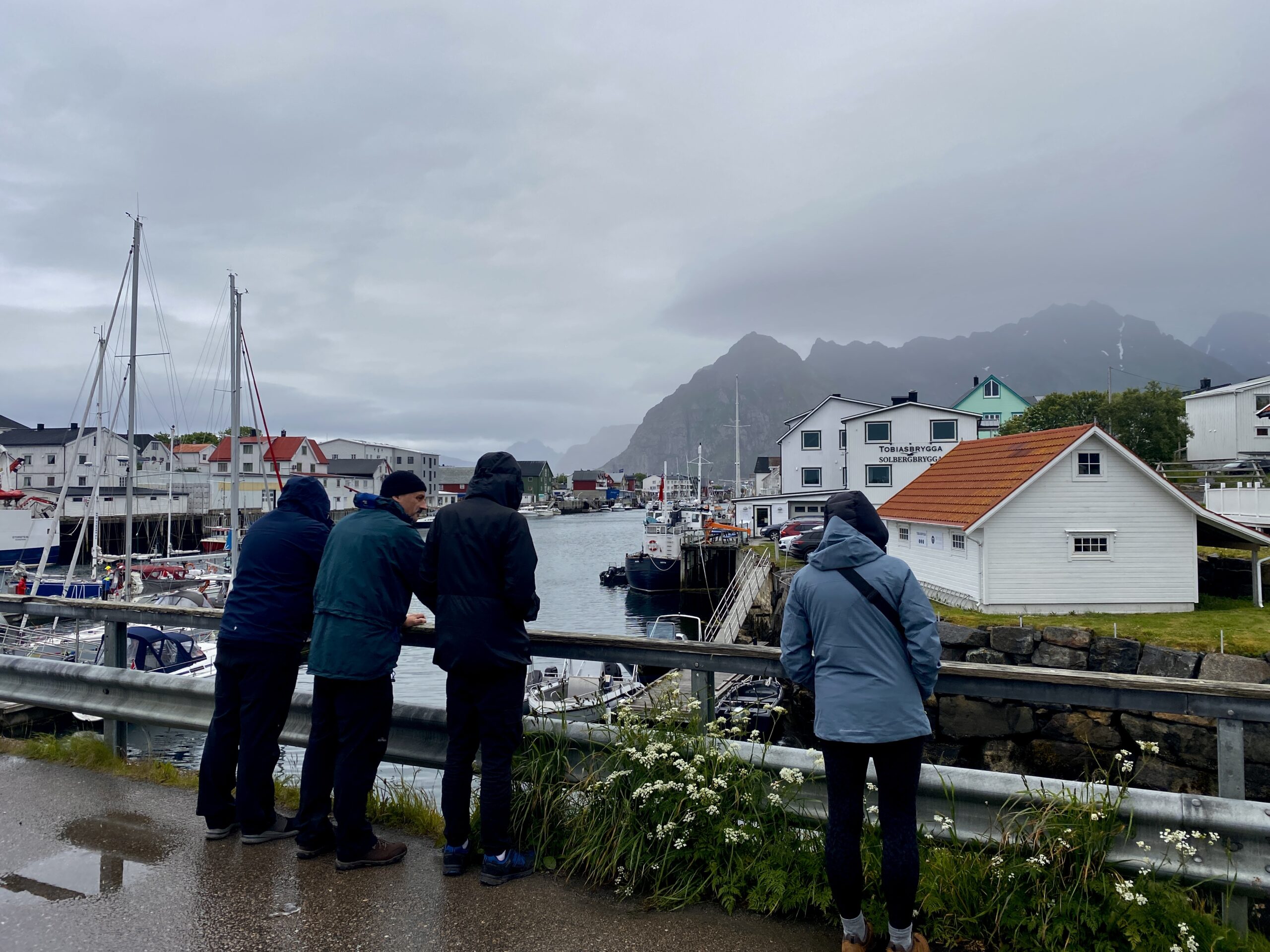
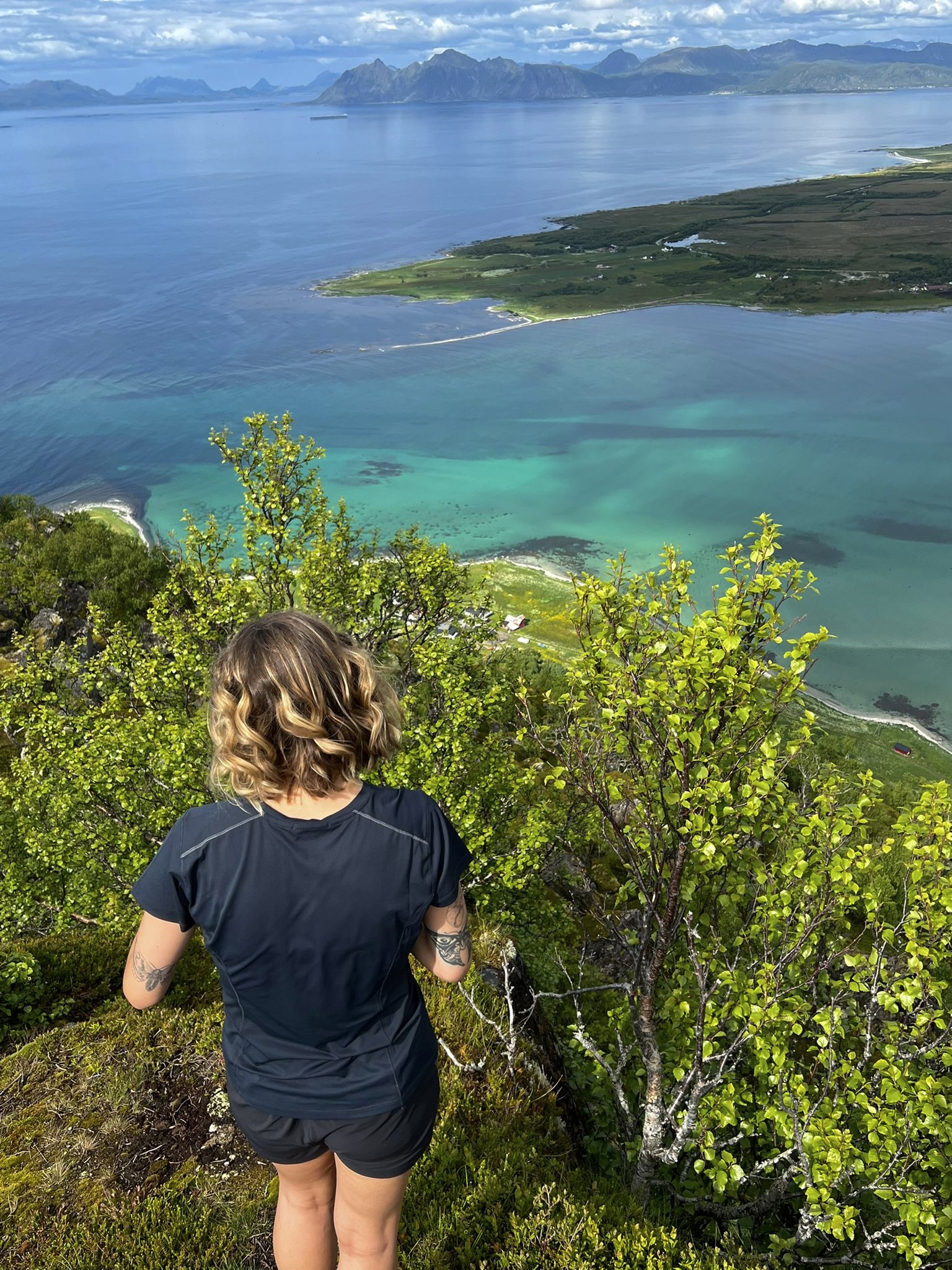
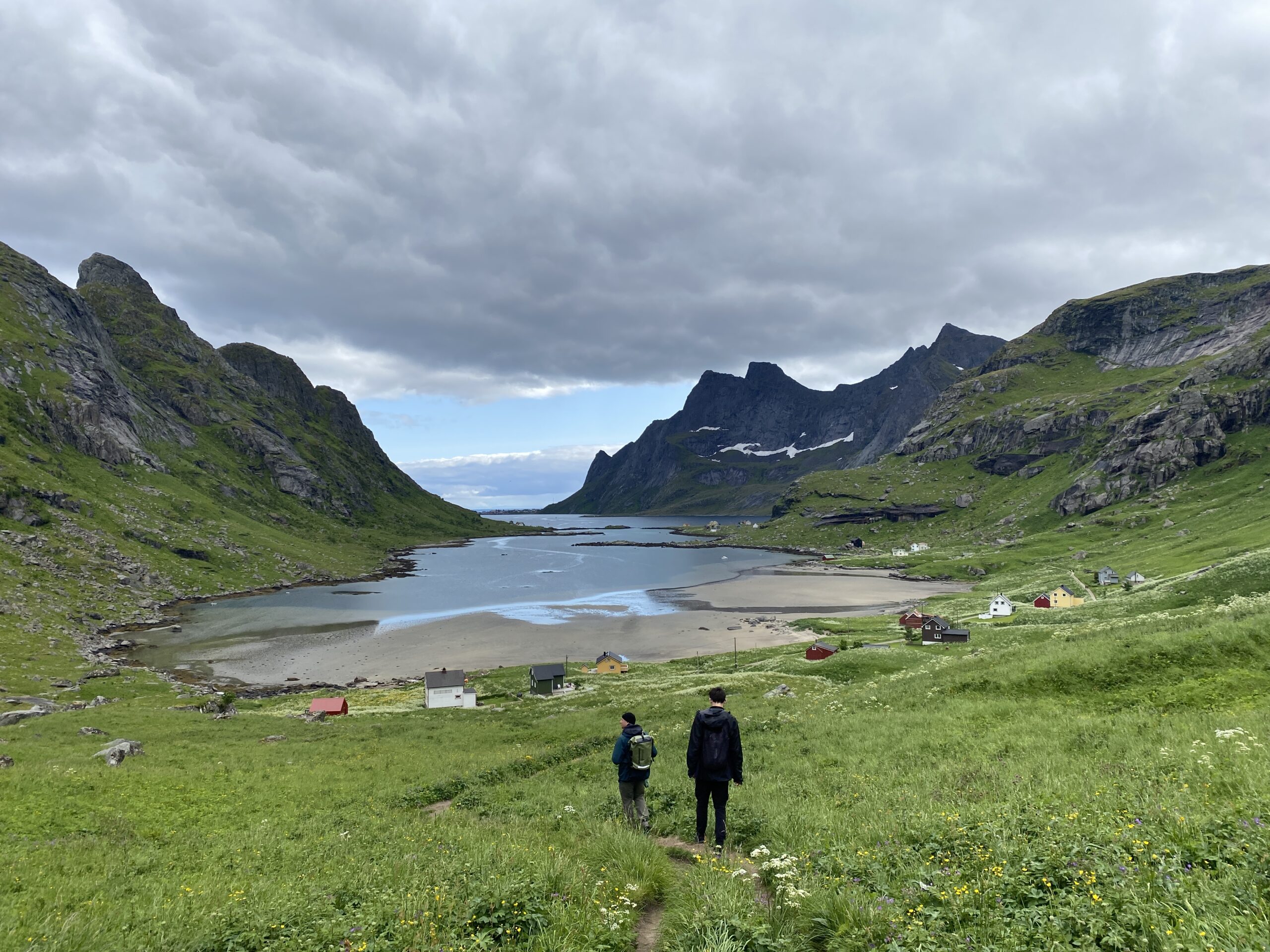
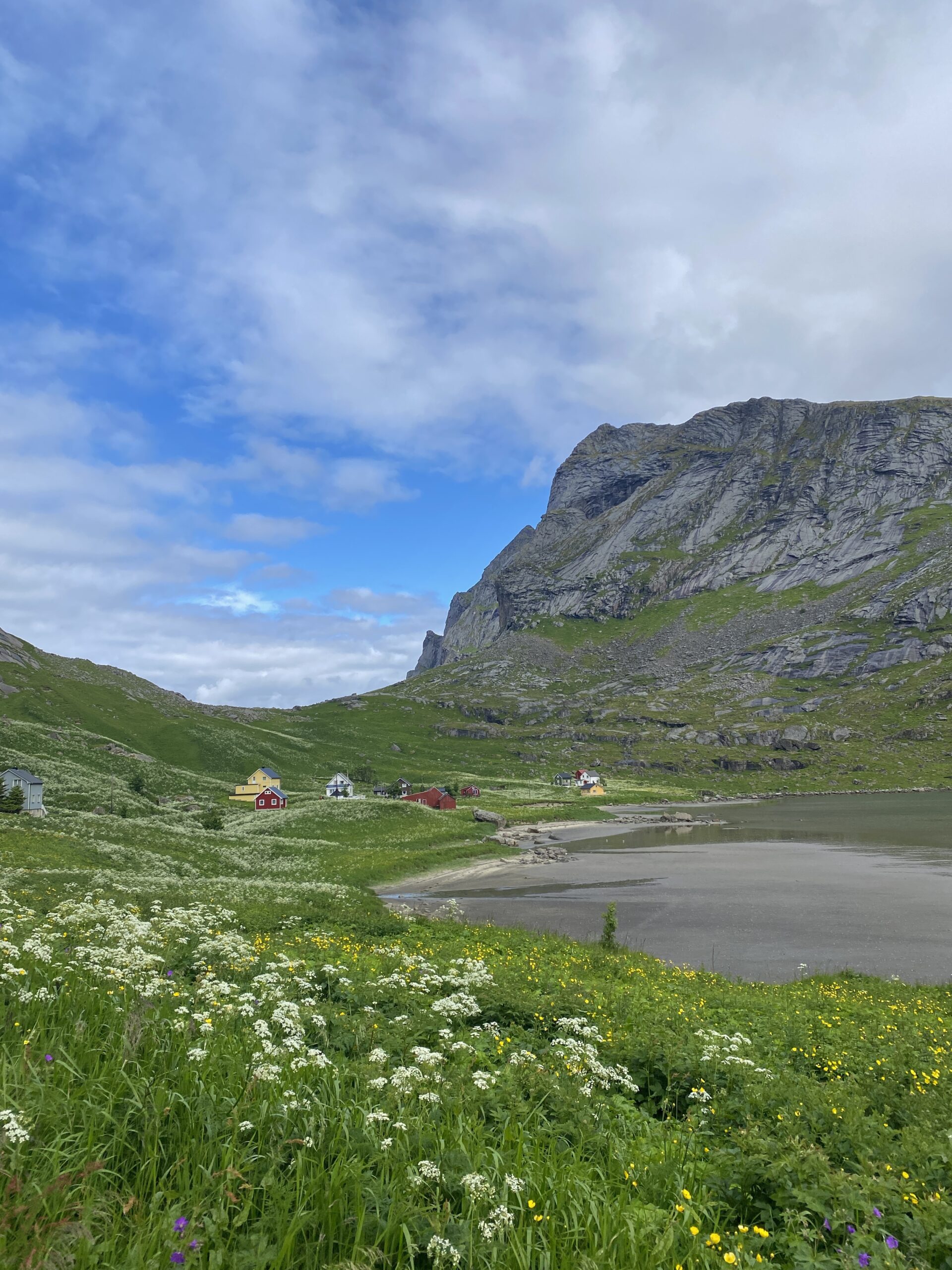
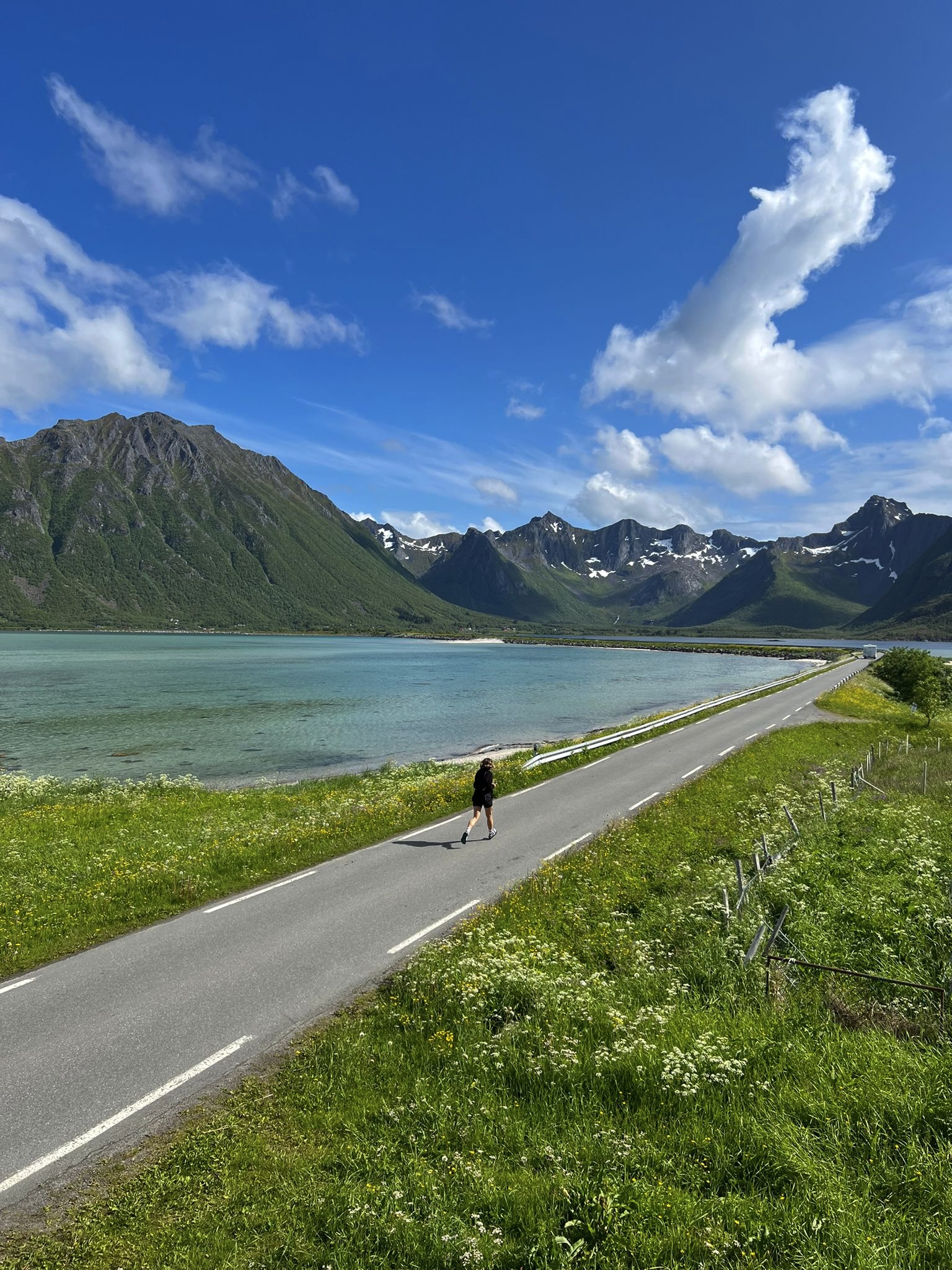
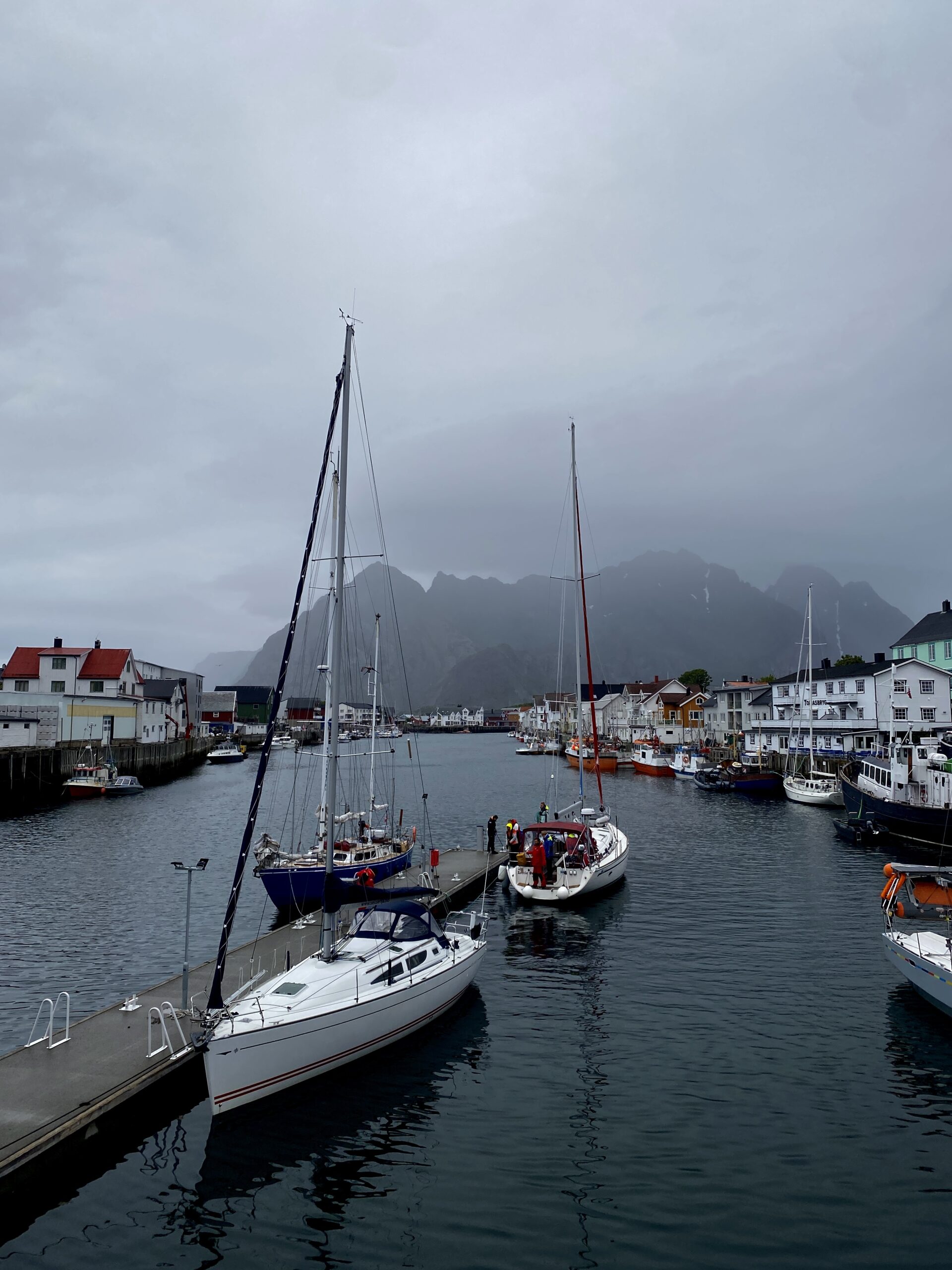
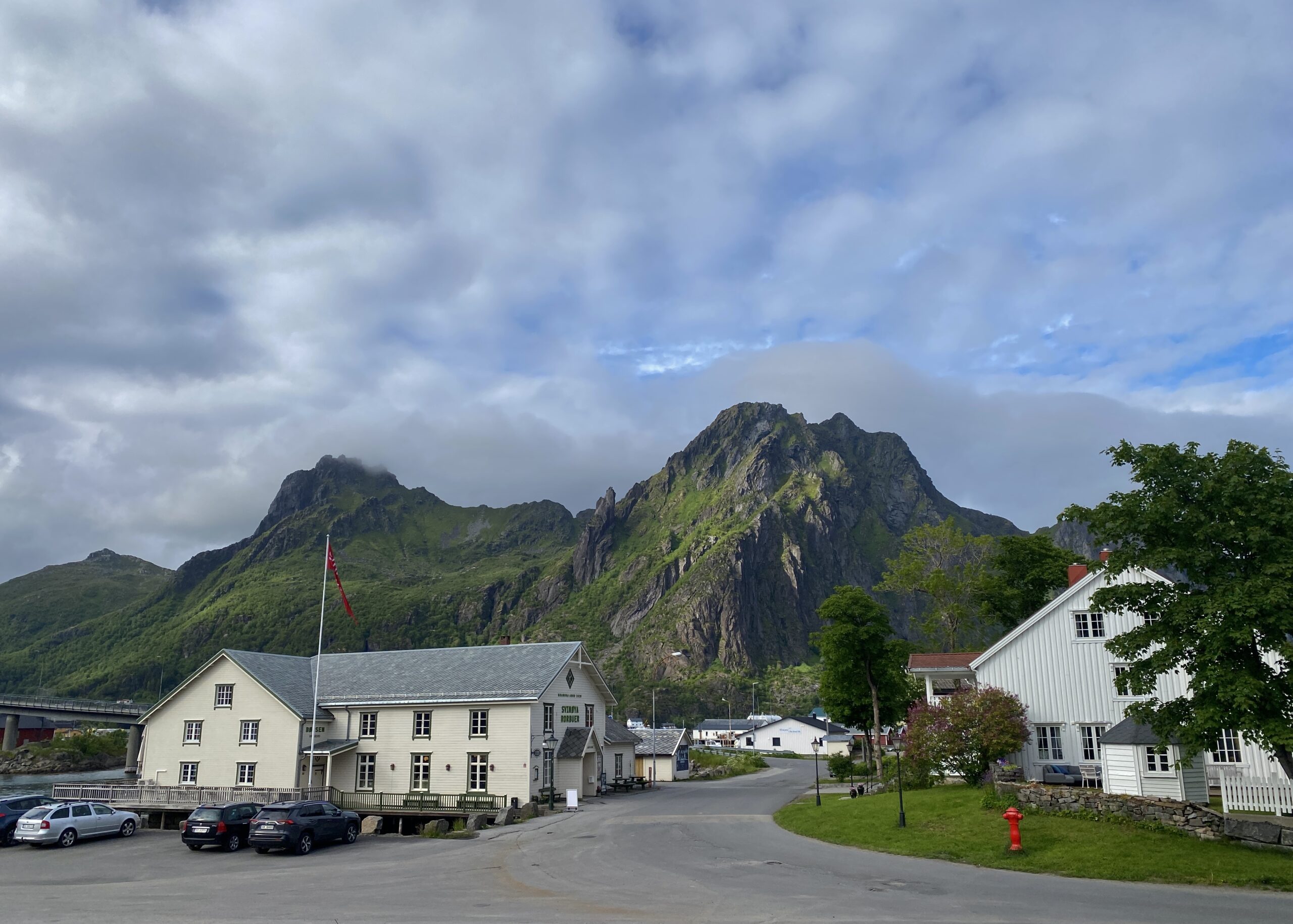
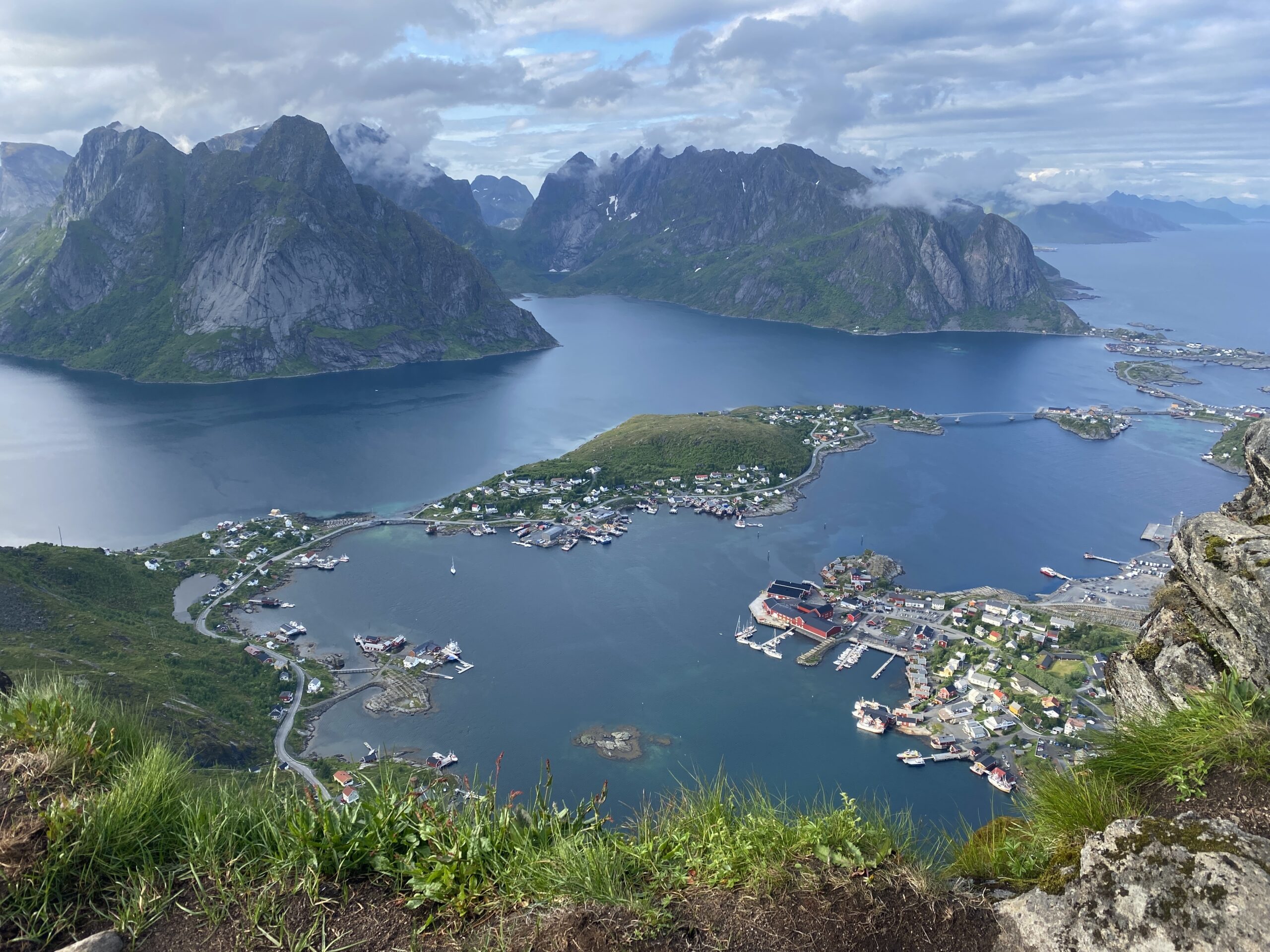
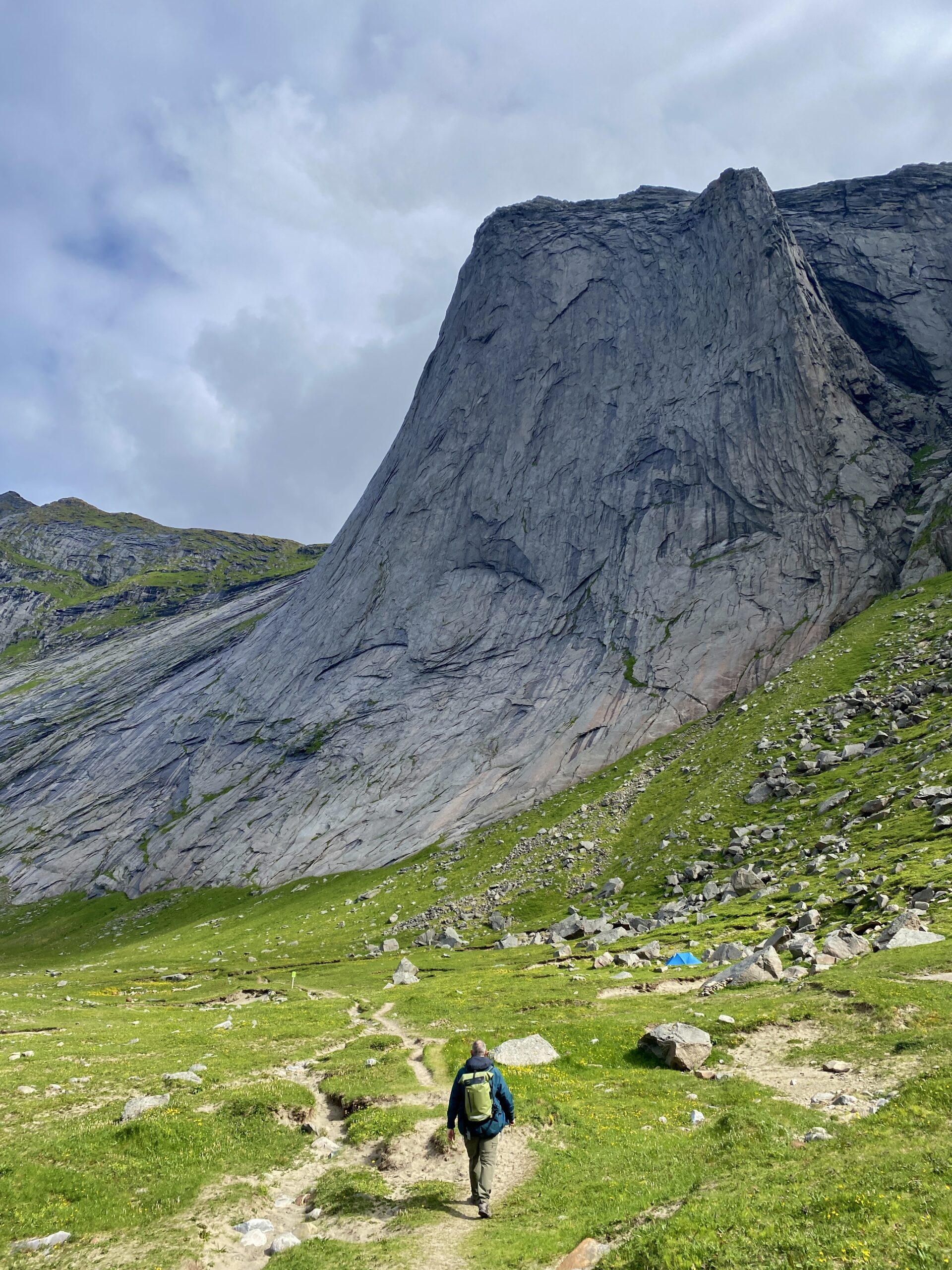
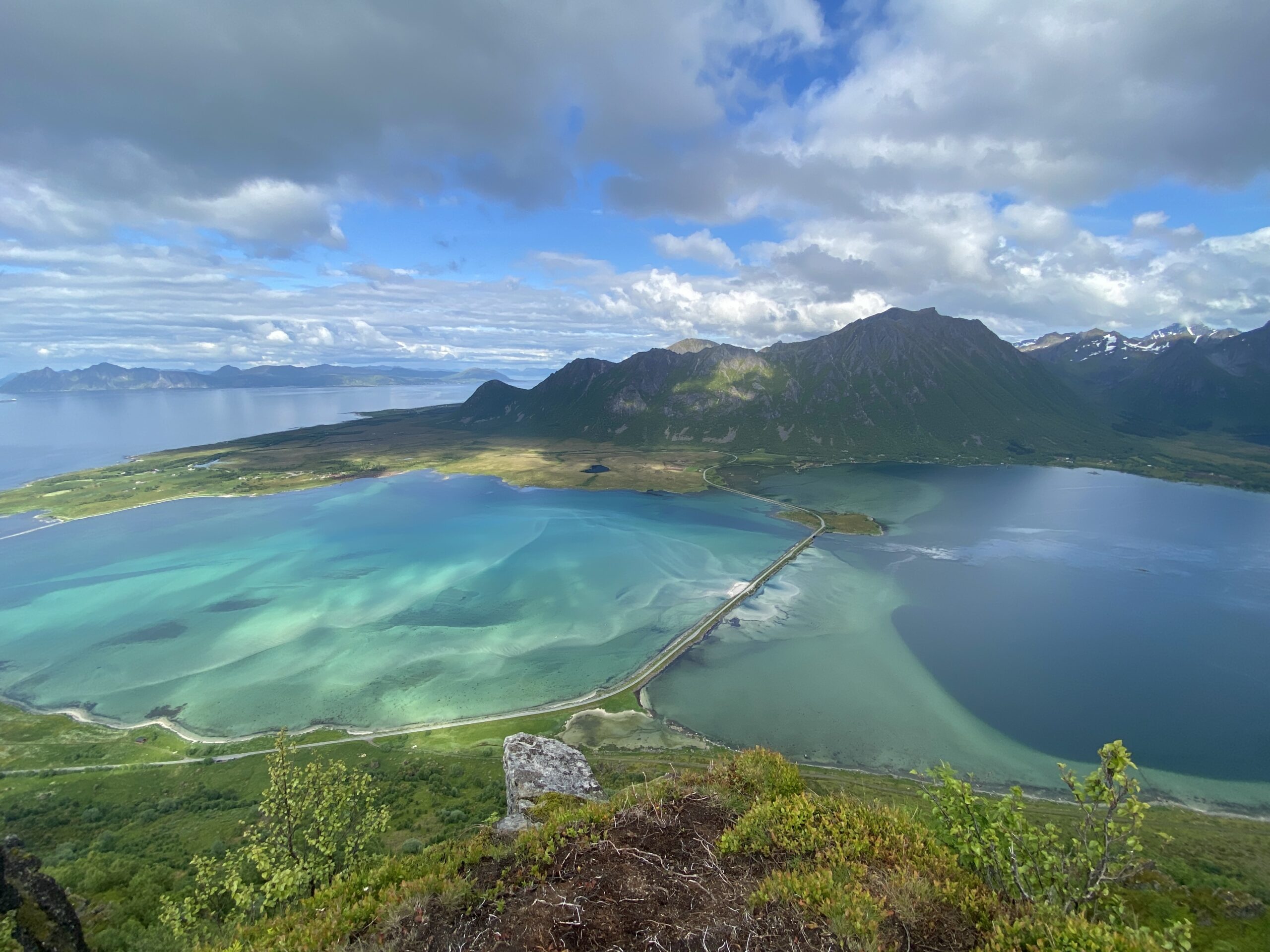
The Lofoten Islands’ natural scenery feels like something out of a folklore book. Let me describe it to you. The archipelago is in the far North-West of Norway, over 100km above the Arctic circle (68 degrees North latitude to be exact). They are strung together by winding roads, bridges and tunnels that cut through either the ocean or the rock, knitting the scattered islands together. Deep fjords carve out the coastline crafted by huge, towering rocks which rise from either side. These rocks loom straight out of the ocean, creating the most impressive mountain peaks, it’s for this reason that there are no flat walks in the Lofoten islands, the only option is to climb straight up from sea level. Mist clings to the shoreline and the clouds often conceal the tips of the surrounding peaks, but if you are lucky enough to catch a clear view, the expanse will take your breath away. The air carries the scent of salt and seaweed, and boats bob gently with the tide.
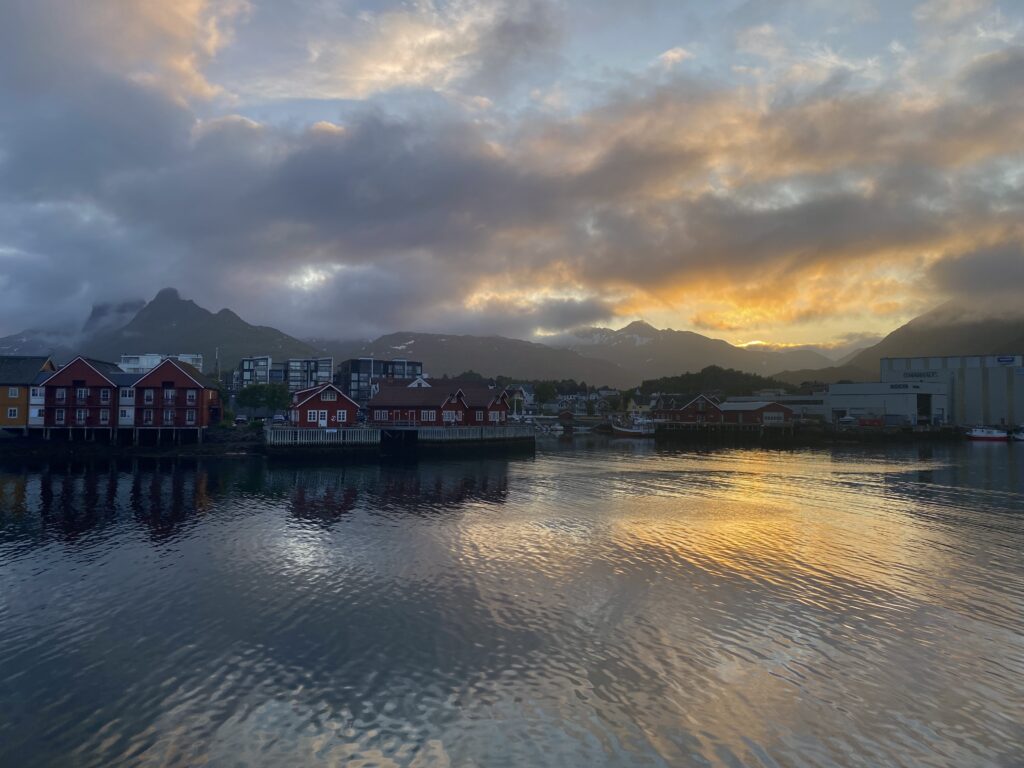
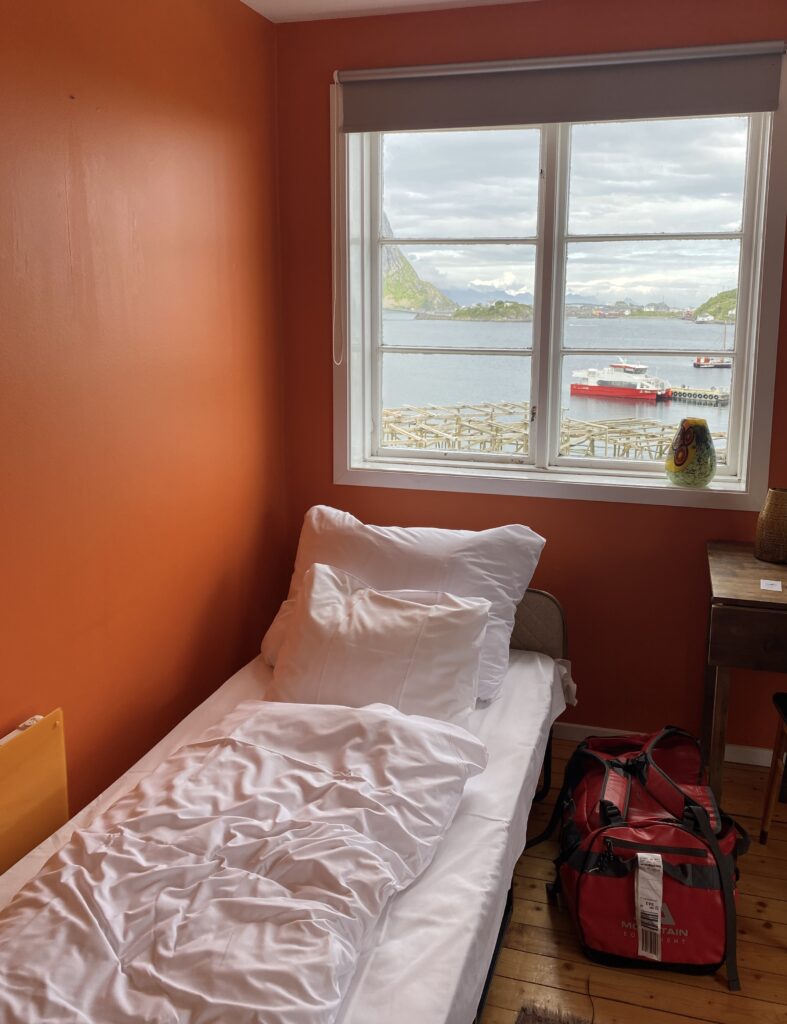
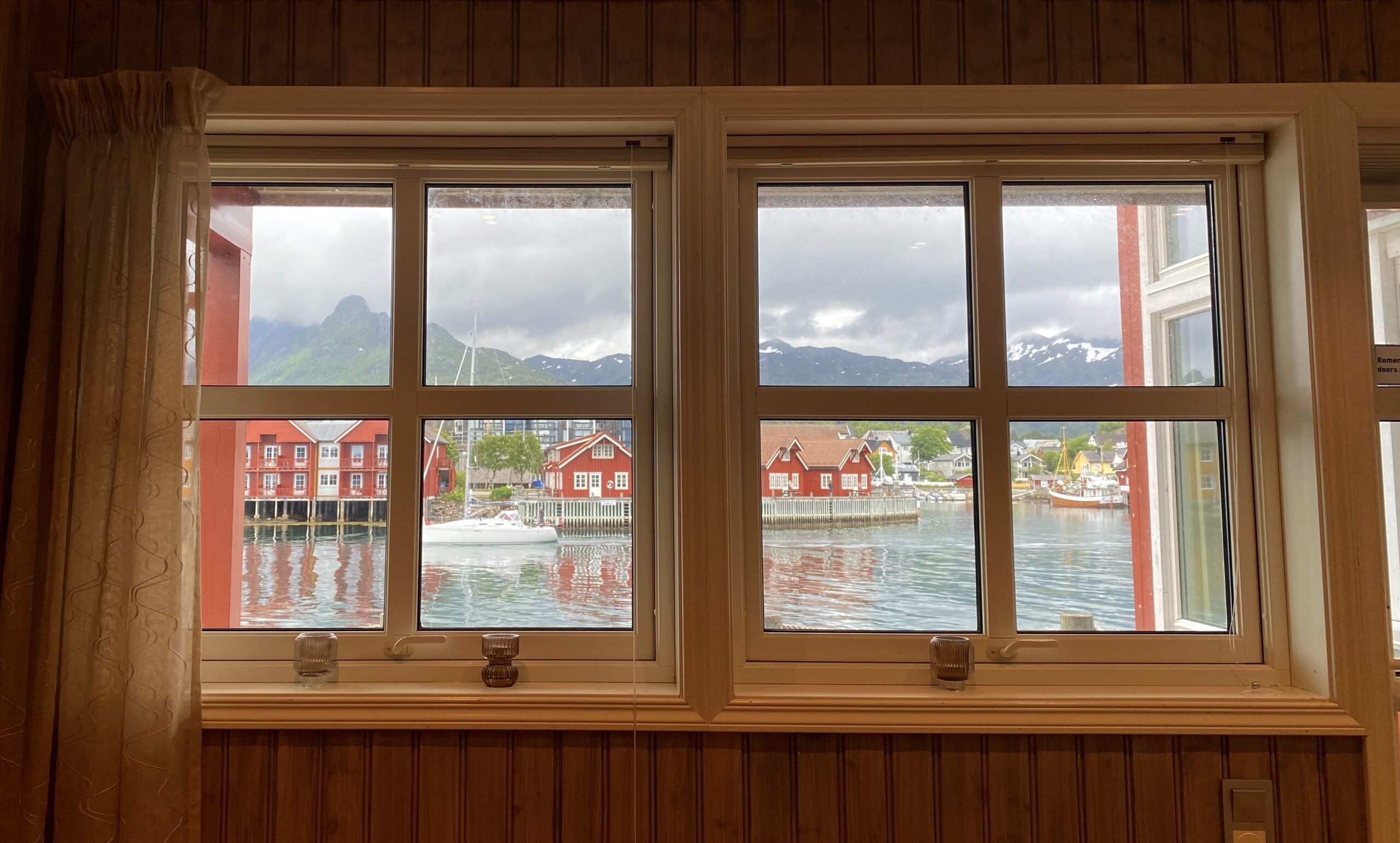
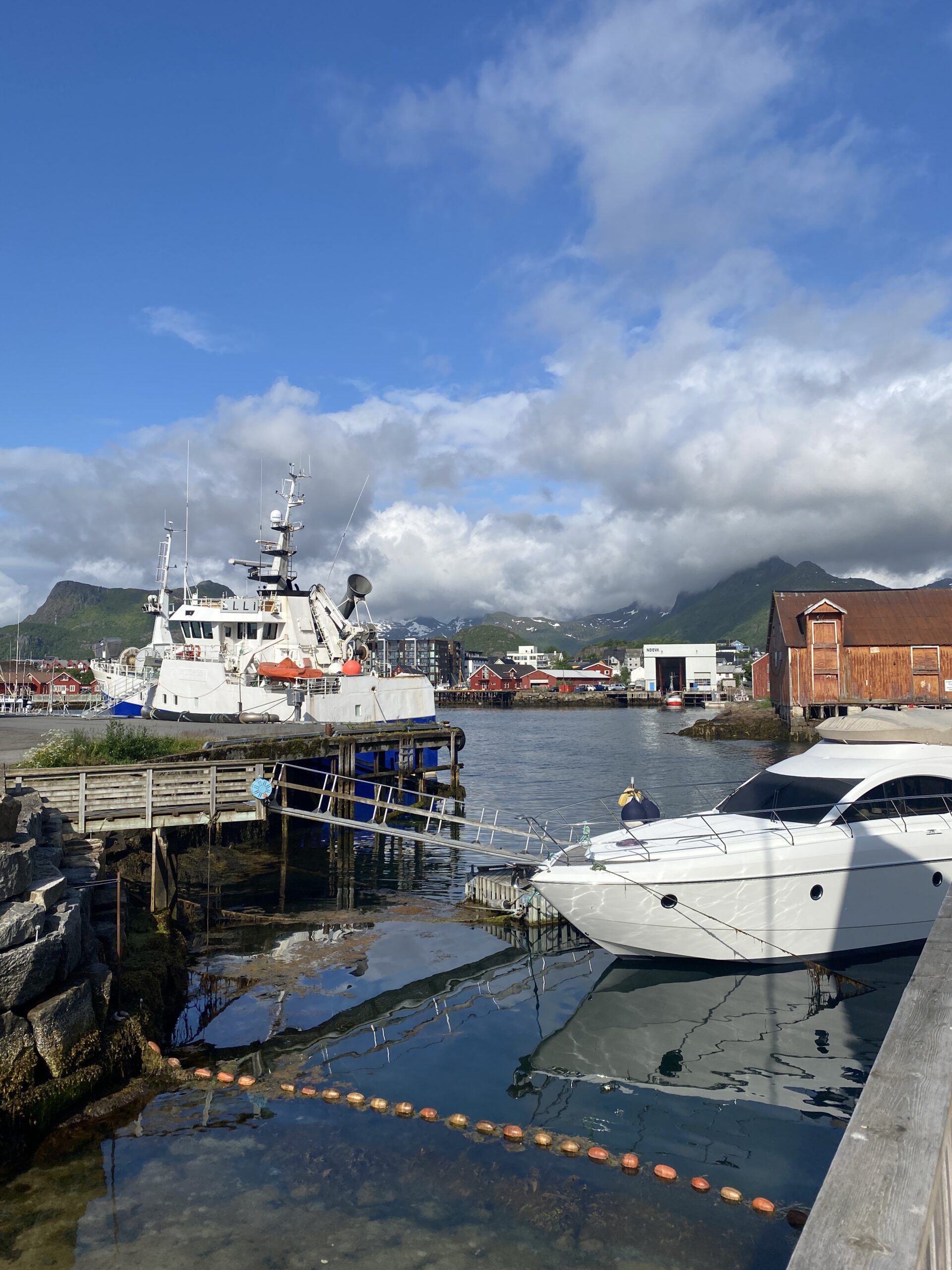
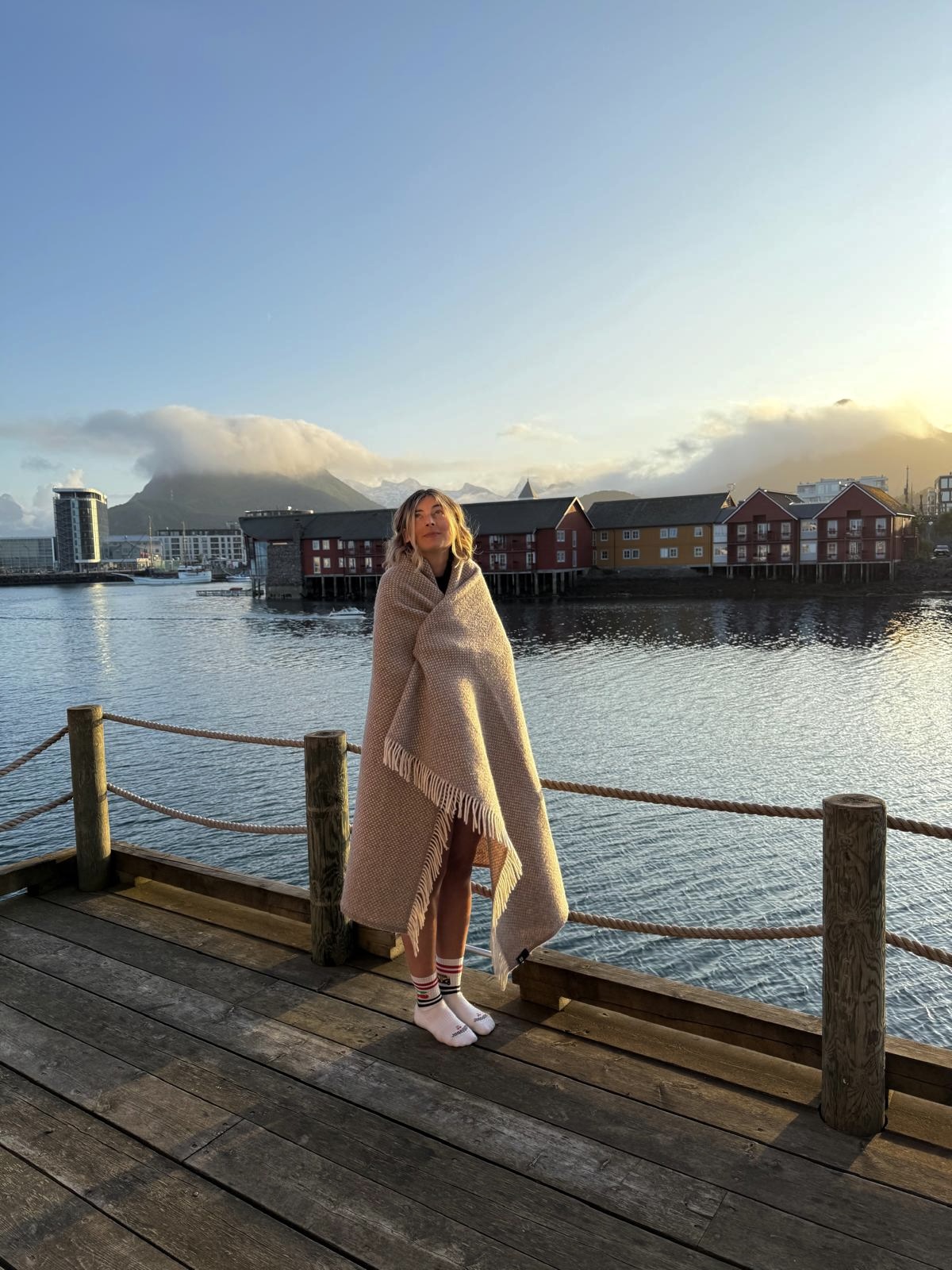
Fishing villages are scatted along the oceans edge housing my favourite part of the landscape; the red, matchbox rorbuer. These are small, stilted cabins which were originally built to house fishermen, many of which have now been restored and transformed into cosy accommodations for travellers. Their simple, functional design reflects the rugged lifestyle of the communities that built them and create a picture-postcard image of Norway. In summer, the sun never sets due to the islands positioning, but I imagine when the desolate winter inevitably rolls around and the dark nights start drawing in, these rorbuer provide a great source of comfort, warmth and tradition. The main villages we used as a base for our exploration were Svolvaer, Reine and A. A is the last letter of the Norwegian alphabet, and the last village situated right at the tip of the Lofoten Islands, at the very end of the road. These are truly some of the most unique places I have ever visited, with a landscape which somehow appears dramatic and quaint at the same time.
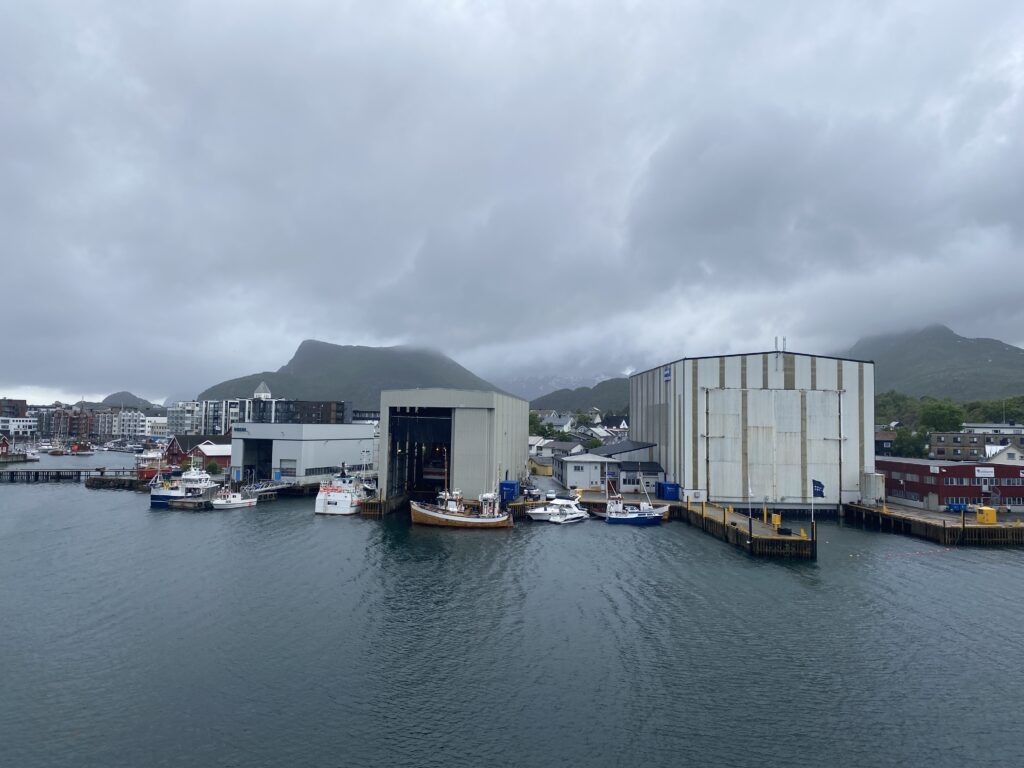
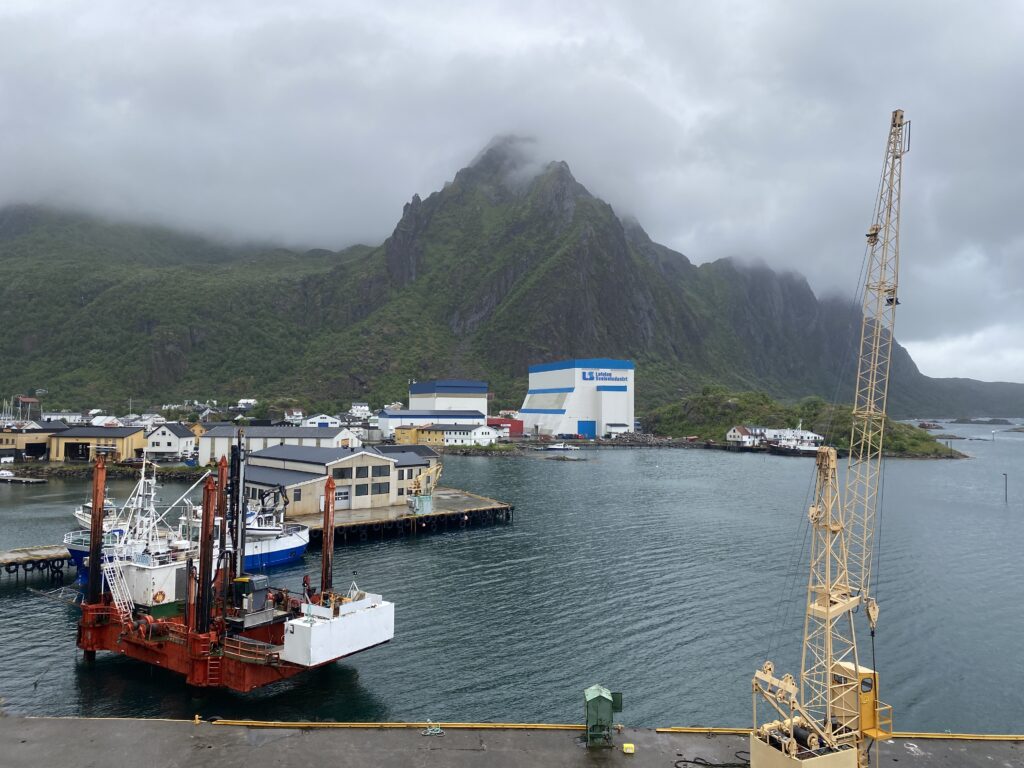
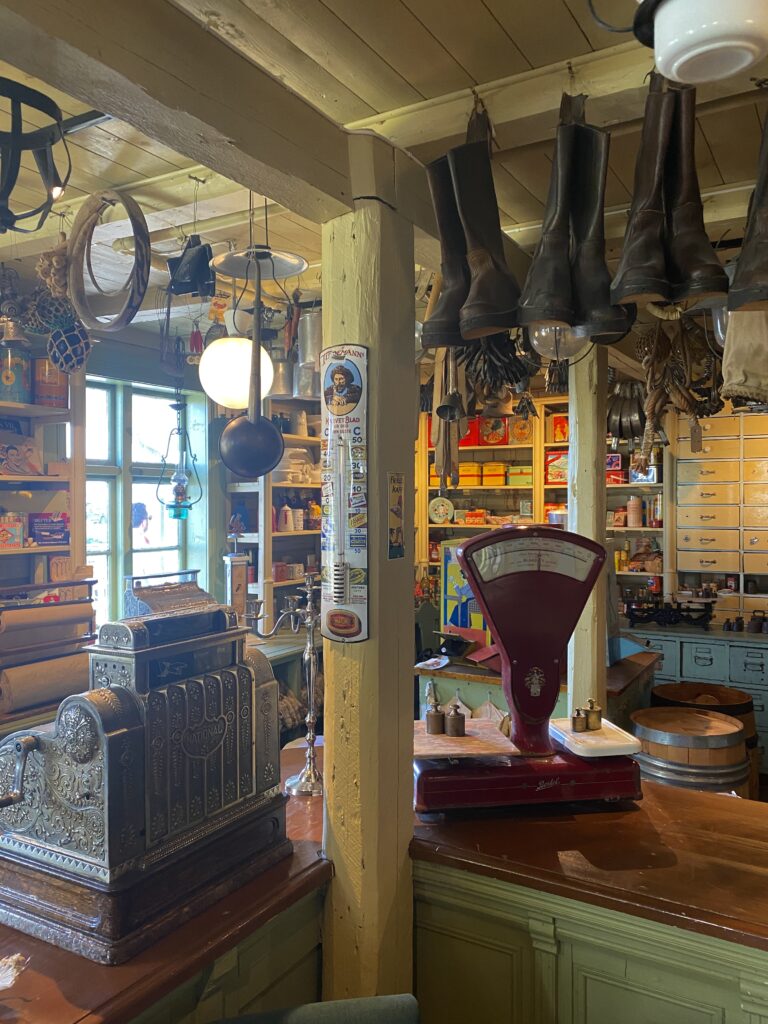
The side of Norway that coexists with these landscapes was a somewhat surprising element to me, it’s industrial identity. Naturally people are going to post about the beautiful scenery and bountiful hikes, but as a result they leave out other key aspects of Norway’s heritage, however, this allowed it all to be discovered upon arrival, which I am grateful for. I love noticing these subtle differences myself, again piecing together bits of the puzzle. This industrialism seems to be deeply rooted in the country’s natural resources and maritime heritage, with fishing, cruise tourism, and oil production forming the backbone of its economy. The countries fjords and Arctic landscapes have made it a magnet for the cruise industry, drawing ships to ports like Bergen and Svolvaer, with millions of tourists visiting per year. Oil production also remains vital; however, Norway is actively steering toward renewable energy, balancing its industrialisms with a vision for a greener future. All these quirks are part of the countries make-up, and I find it fascinating. As you drive along the main road, for every scenic shot you capture there was also factories, construction works, or a cruise ship, yet this was never at detriment nor inconvenience to our trip, (and obviously this doesn’t remain the case once you get deeper into the wilderness), just an interesting point to note.
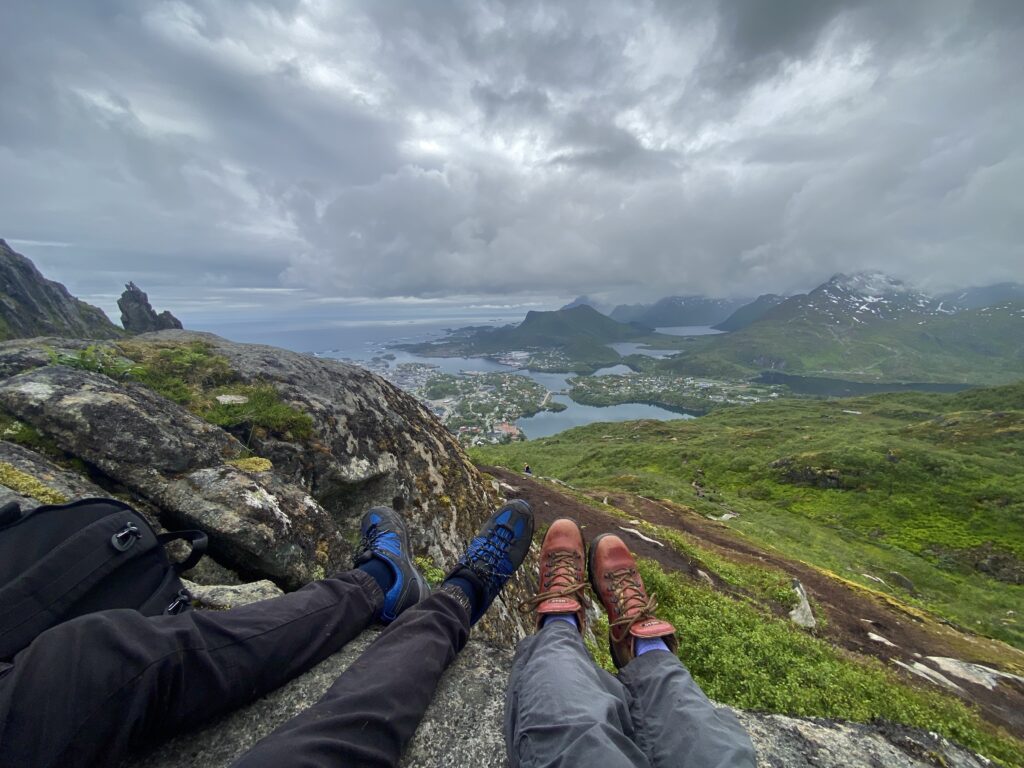
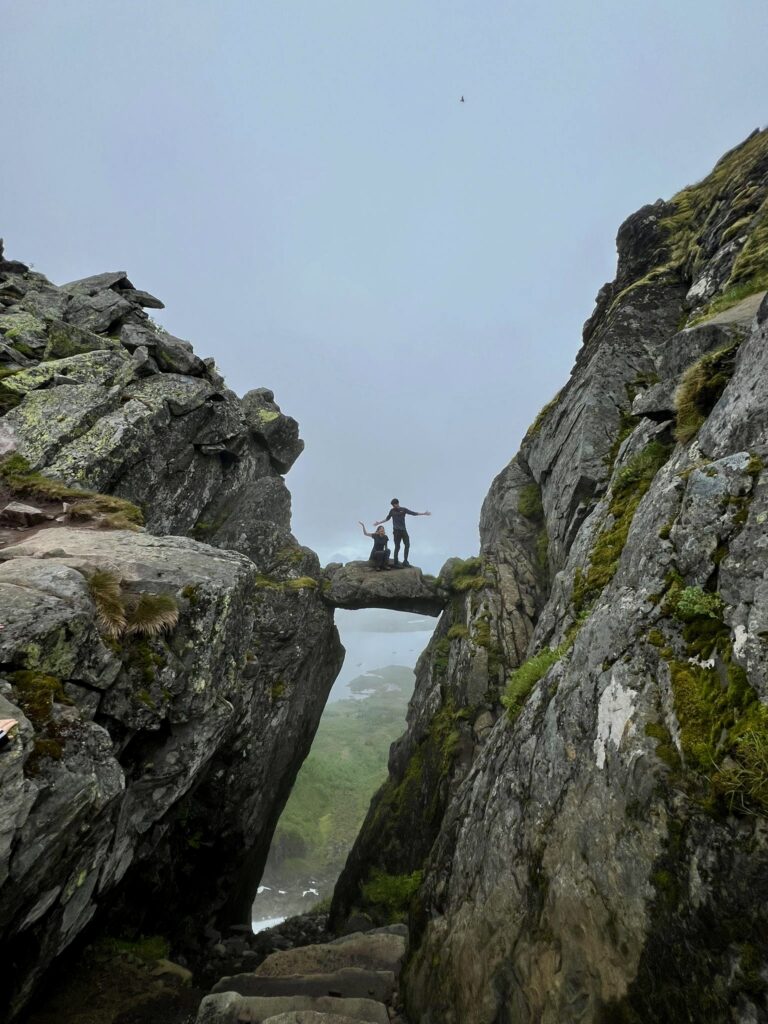
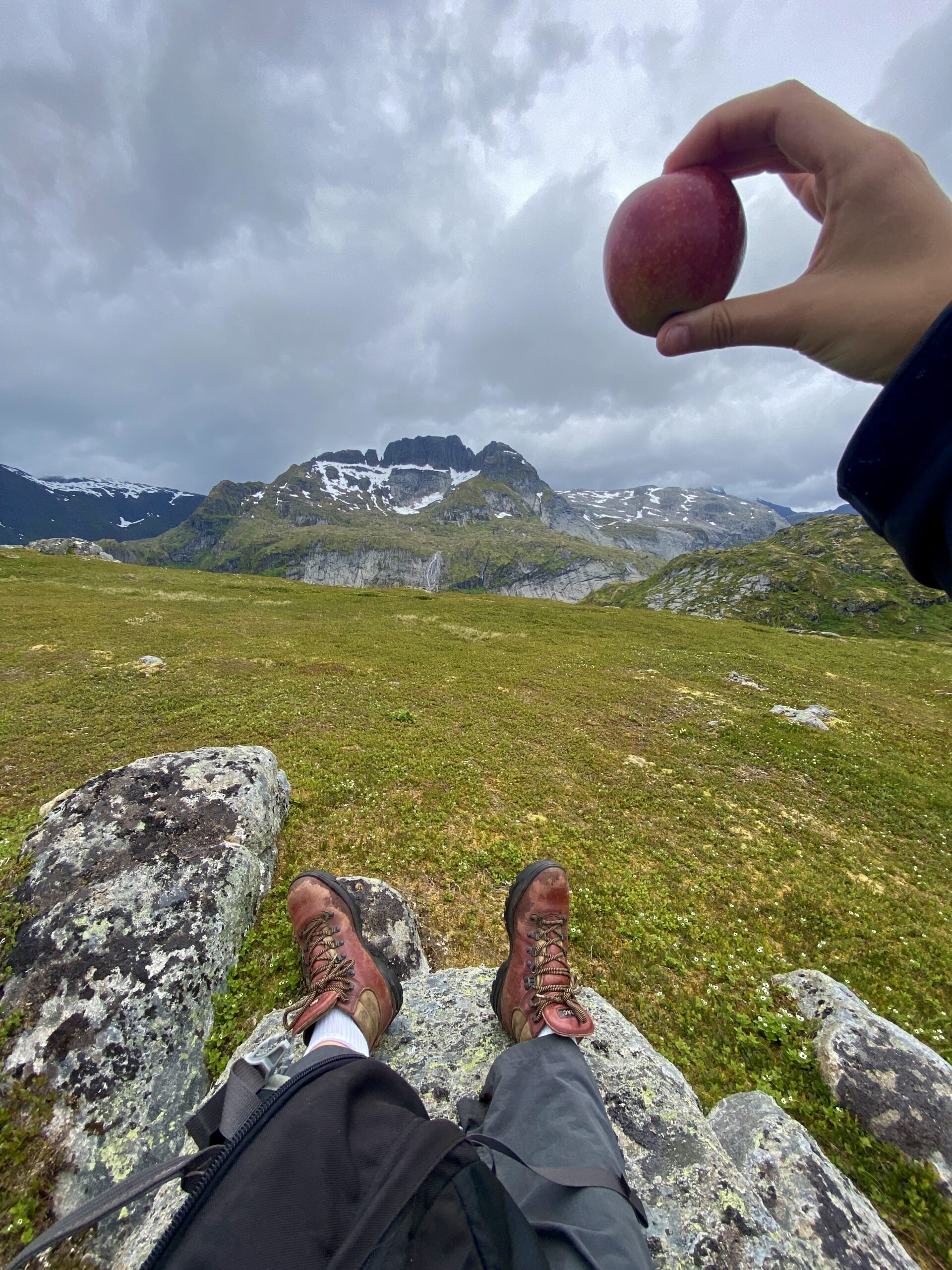
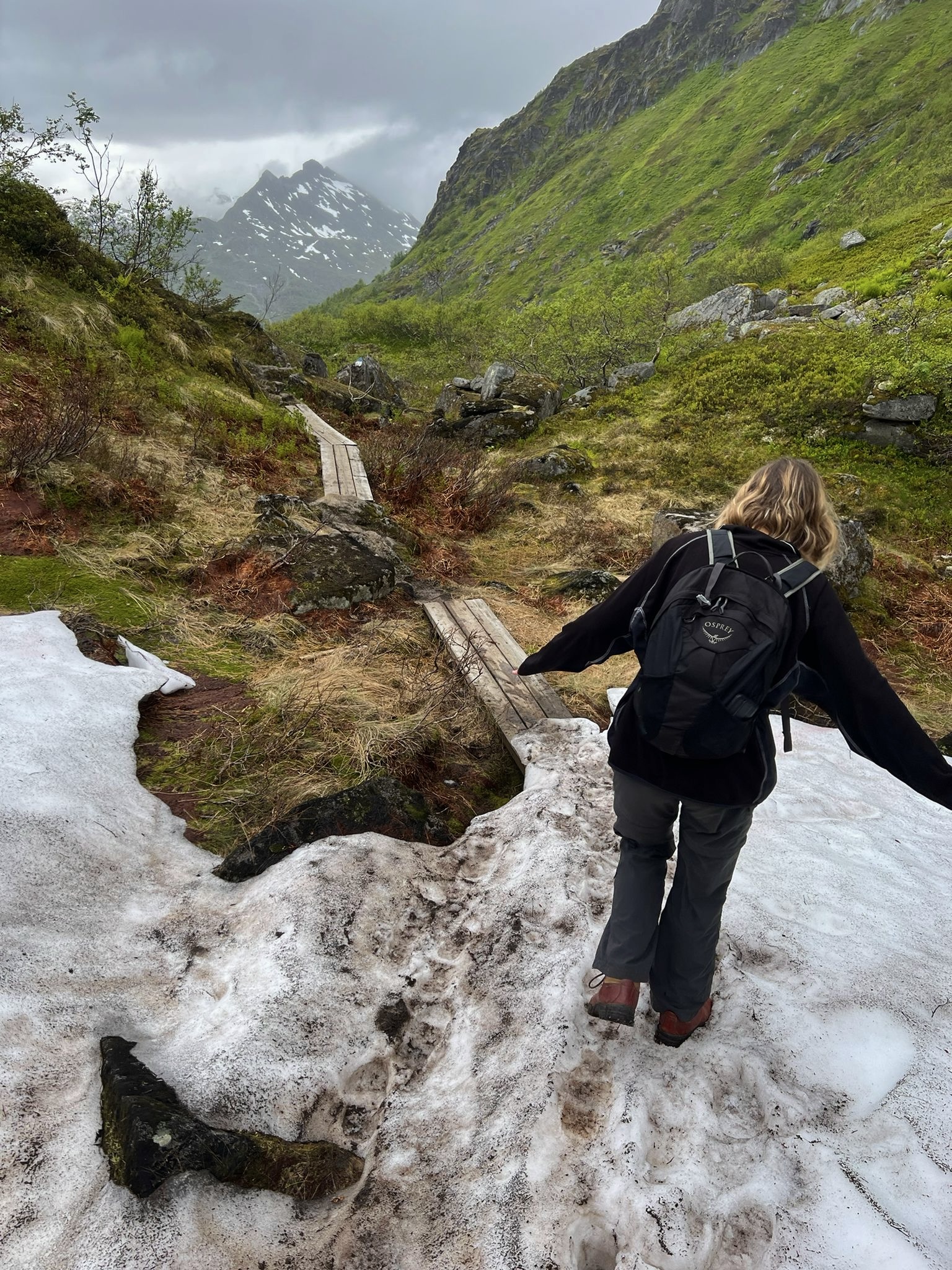
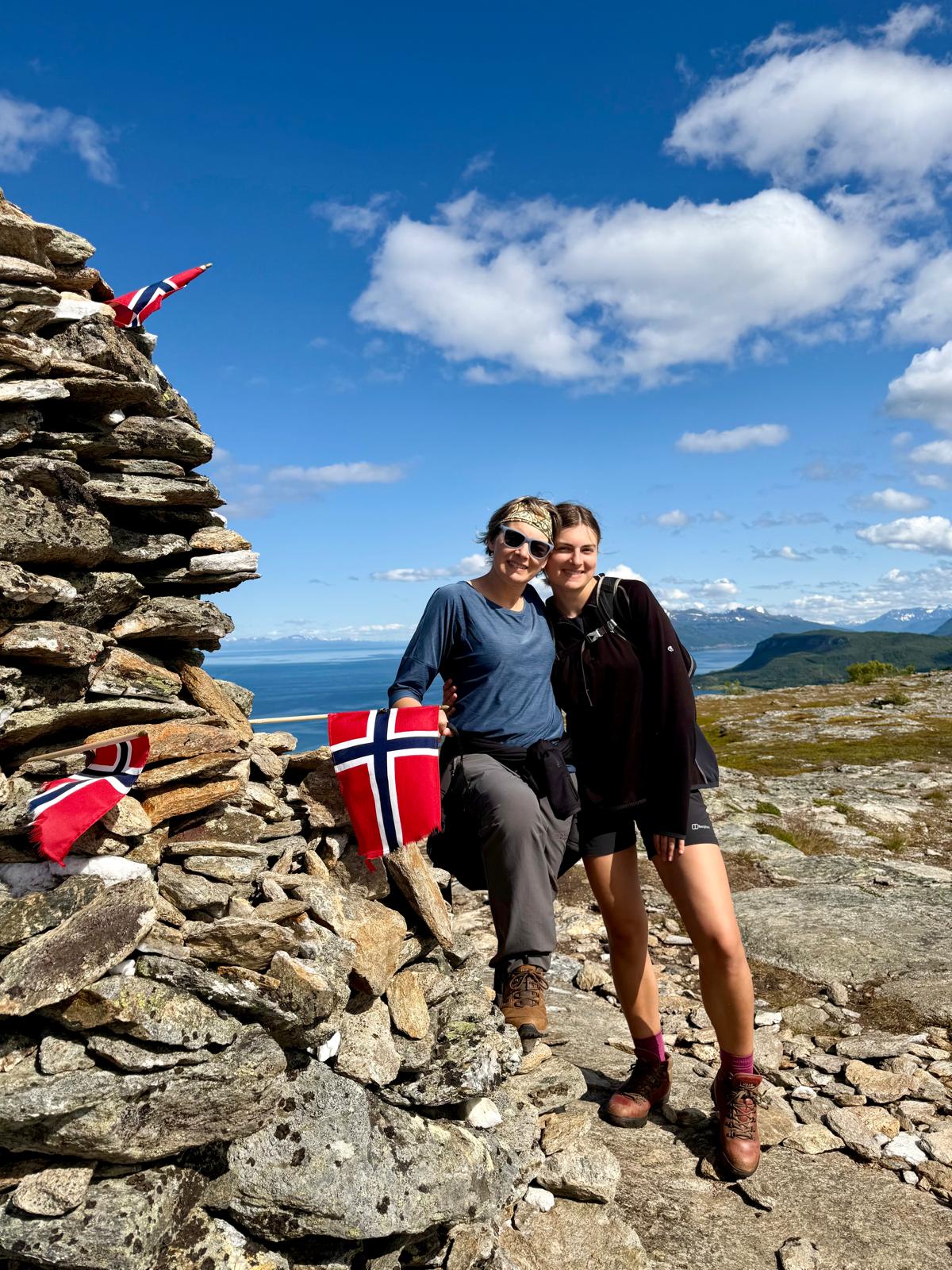
Speaking of this, not much seems to bother Norwegians, they just get on with things. Roadworks? We can drive around. Wrong order? My apologies I’ll get you the right thing. Huge mountain to summit? Light work, this is rated an easy climb – I’m not sure any of the hikes I did were actually easy. Like I mentioned previously, all paths lead straight up the mountain, the is no room for meandering along the flat, it is either climb or stand still, and standing still simply isn’t an option in one of the most beautiful places in the world. Trails consist of vertical ascents up either rocky stairs like the famous Reinebringen hike, or paths that weren’t any more of a path than mud and stones. It wasn’t uncommon for chains to be attached to the side of rocks to help with footing and balance, something much needed on the steep slippery sections. My favourite hike was called Djevelporten (translating to Devil’s Gate), me and my brother found this route to be the perfect balance of dirt track, rock slab and stairs, with views over Svolvaer in one direction, and sweeping mountain terrain the rest even on a cloudy day.
3. Tackling travel guilt.
Driving back through on our way out of the islands I was so incredibly exhausted. I hadn’t slept well the whole trip, and we were constantly on the go, however, I wouldn’t change a thing. I got to experience 12 magical days making memories with my family, and my parents especially deserved this time away. I’d be lying if I said I didn’t feel a sense of travel guilt at this point. This place was so breathtaking, and I found myself wishing everyone could experience it, but I know that’s not realistic nor sustainable. The landscape is already showing signs of strain from over-tourism, and more visitors wouldn’t help. Somehow, I had to balance the privilege of being there and the knowledge that too much love would harm the very thing I admire. It is a blessing that the locals so graciously welcomed us into their home, despite its fragility, so we too could enjoy its beauty. I believe we travelled with minimal impact and I hope that by sharing this I’ll inspire other travellers to do the same: respect the locals, leave no trace, and enjoy the experience. This is also how I will manage my travel guilt going forward – by being mindful, by giving back, and by promising to repay the favour one day. The world should be open to everyone, and I’ll be the first to welcome you with open arms into my corner of it. Inclusivity is at the heart of everything I believe. I’ll treat weary travellers the way I hope to be treated when I’m far from home, with warmth, respect, and a sense of belonging.
Ultimately, I don’t think you need to fully ‘understand’ a country. It isn’t something that belongs to us, and I don’t believe it is possible to ever fully know the ins and outs of a place when it isn’t your own home. Despite this, it is certainly fun to explore, to be curious and ask questions. This way you inevitably learn more about the culture and have a greater appreciation of what you’re experiencing.
Thank you, Norway, for your spectacular views and leaving me with so much more to ponder.