Nov - Dec 2025.
Lessons from locals living on the top of the world.
Nepal is home to eight of the ten highest peaks on Earth and despite spending weeks trekking amongst them, they surprisingly weren’t the most spectacular aspect of the country. The greatest insights I found weren’t in the mountaintops, nor the guidebooks, but were discovered through experience and everyday interaction, so here are five lessons I learnt when living with locals in Nepal.
Lesson one: Be compassionate, but not compliant.
I got scammed on my first day.
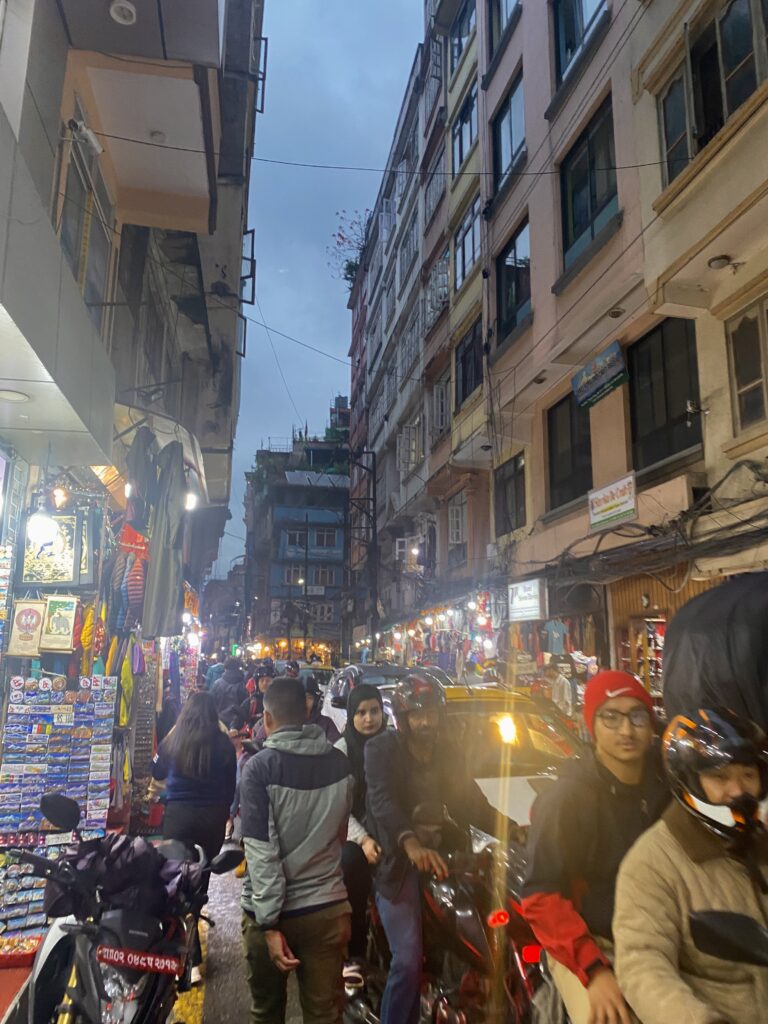
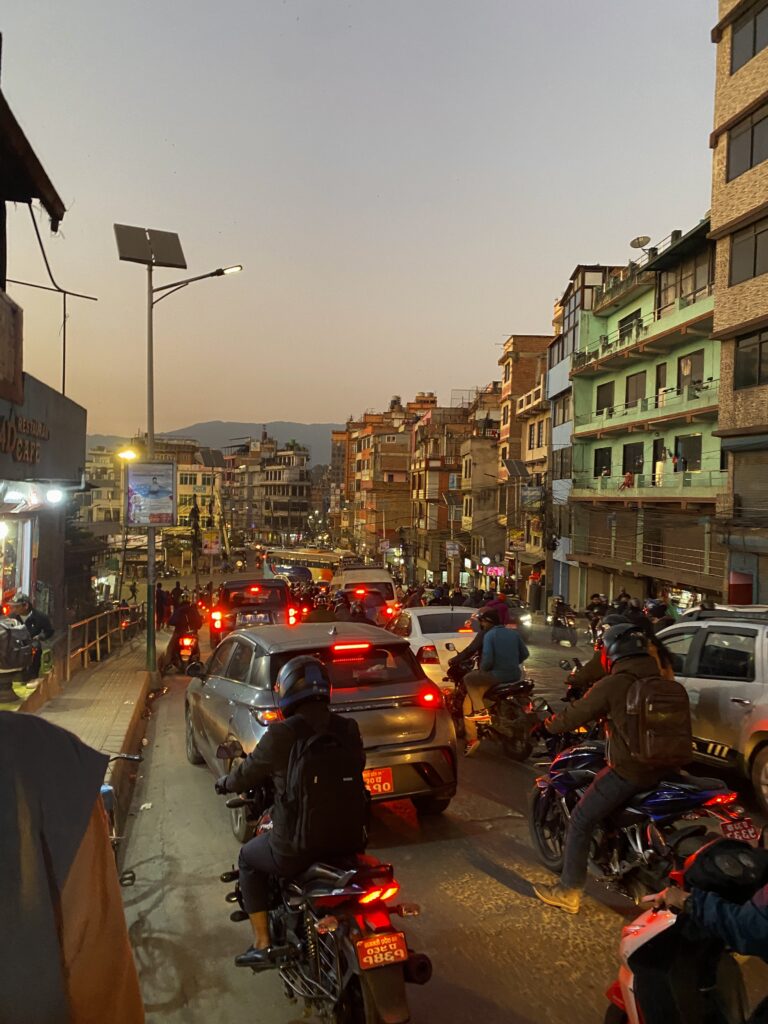
When planning a trip to this part of the world you will constantly hear people singing the praises of the Nepali locals; how kind, generous, and hospitable they are. I didn’t doubt this for a second. Landing in Kathmandu I was full of excitement, ready to embrace the warmth and hospitality I’d heard so much about, however instead I was greeted with grey clouds, drizzle, and a whirlwind of chaos. People bustled past me in every direction; motorbikes darted through narrow streets with horns blaring relentlessly. Jetlagged and disoriented I was somewhat stuck in the middle of this metropolis, home to 1.4 million people yet I didn’t know a single soul. Still, my curiosity won over my fatigue, and I set out to explore Thamel, the vibrant tourist area. That’s when I met him. A friendly local, eager to practice his English. We chatted for an hour, and I thought I’d stumbled upon the authentic connection every traveller hopes for, but it was only a matter of time before I was asked to cough up £180 for one of his paintings. When I politely declined, I was told I didn’t have a choice after time he had spent on me. Every excuse I offered, he came up with a solution. I was cornered. In the end I was able to barter it down to £70, but still I was paying that amount for a painting I didn’t even want. He said he would send it to my address, but I hoped he wouldn’t. I would much rather never see that canvas again as it served as a stark reminder of my travel faux pas. I certainly learnt this lesson the hard way, next time, just walk away.
Lesson two: The Nepali people are amongst the hardest working in the world.
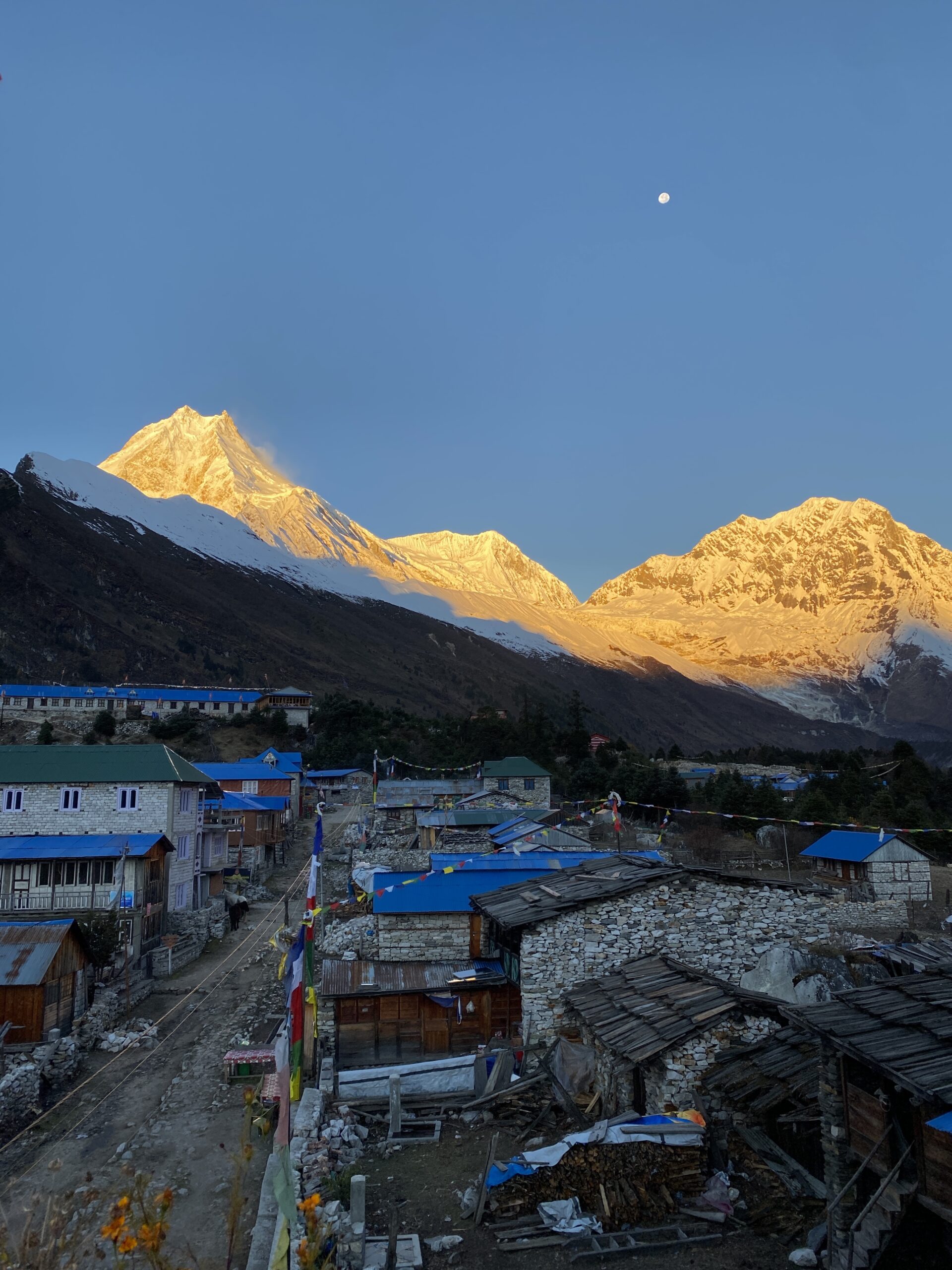
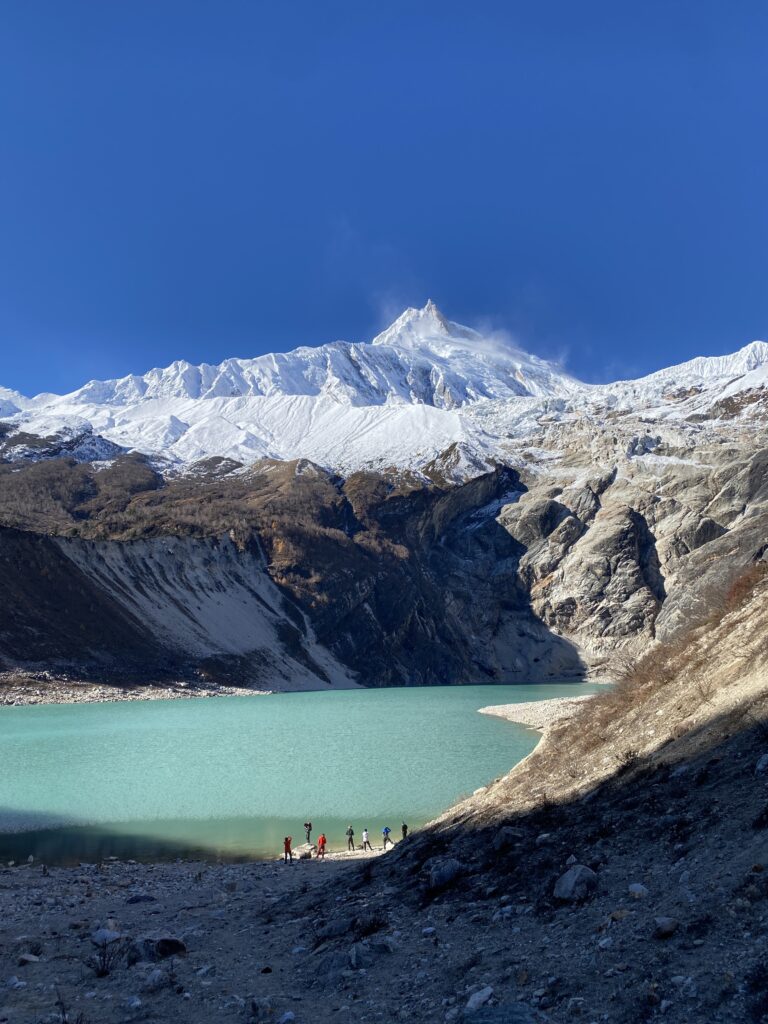
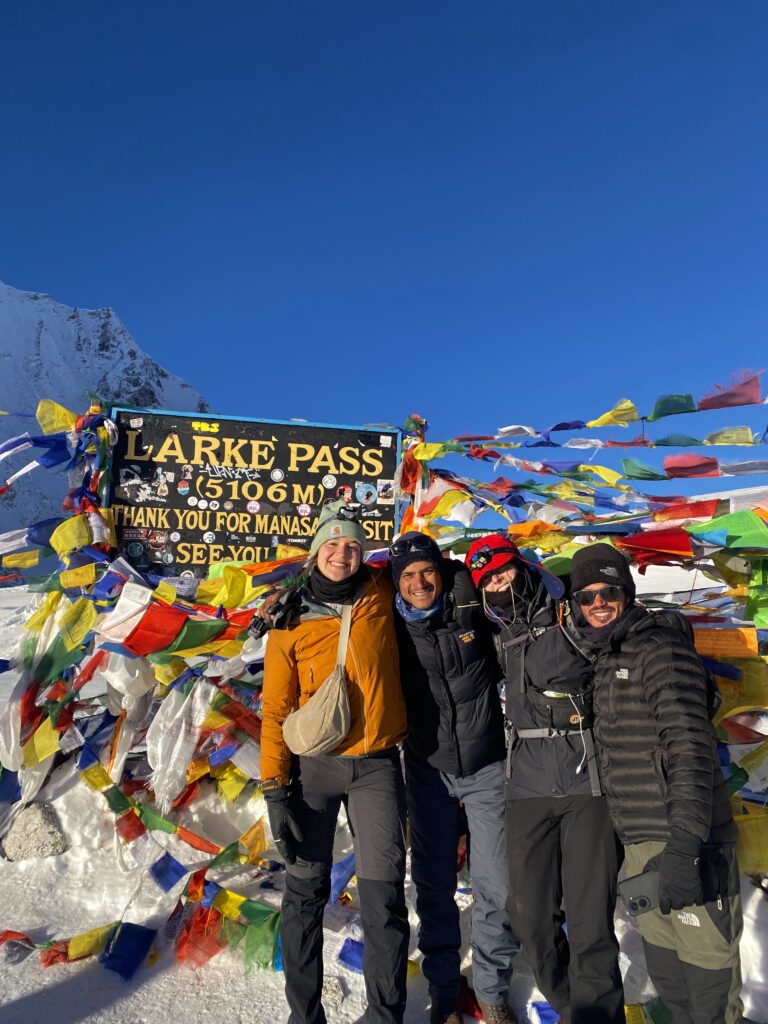
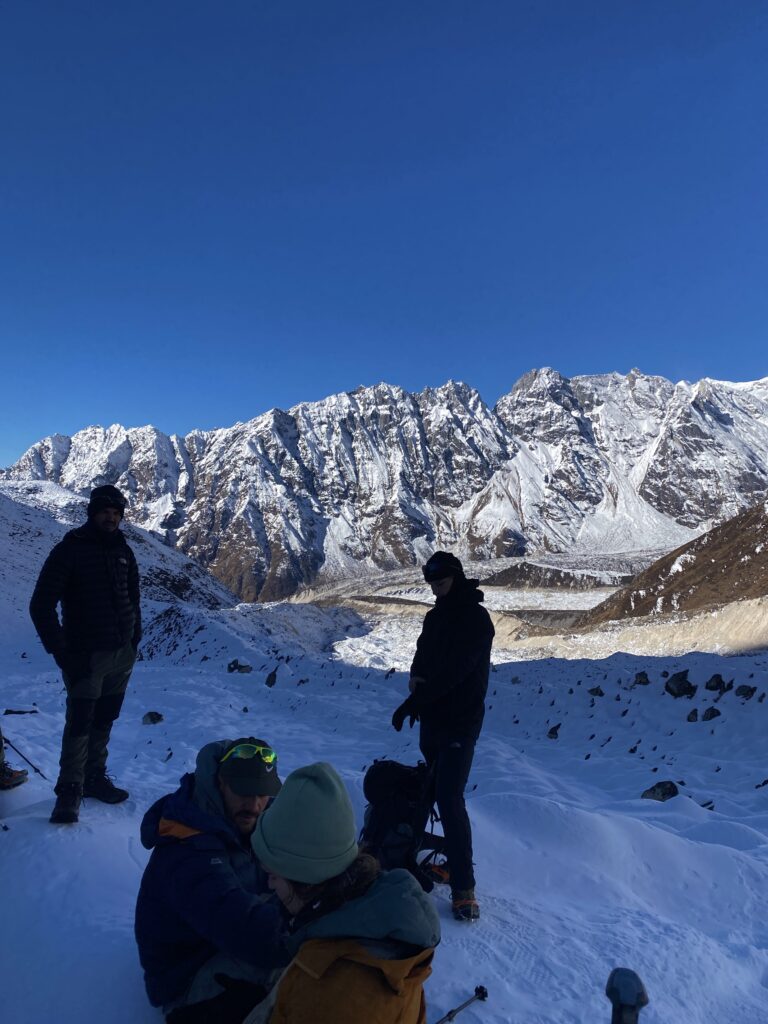
My first mission in Nepal was to complete the legendary Manaslu circuit trek. A 12-day hike tackling 177 kilometres, climbing to a staggering 5106 meters, all whist circling the 8th highest mountain in the world. It is no mean feat. Unlike the popular Annapurna Circuit, Manaslu is the quieter sibling where it’s less crowded, less commercialised and far more authentic. Along the way you stay in teahouses located in tiny local villages, and each day the views change significantly ranging from jungle and foothills to vast alpine valleys and snowcapped peaks. The scenery is truly breathtaking, but this route isn’t without its challenges. Landslides, sudden snowfalls, and unpredictable weather are all part of the journey, but in my opinion, this only adds to the adventure.
Somewhere along the trek, an unspoken rule emerged: we’d help each other out, no questions asked. Everyone had something to offer whether it was sunscreen, lip balm, snacks, trekking poles, or a thermos of hot water on a freezing night. Need water purification tablets? Someone had them. Struggling with altitude? A fellow trekker would hand over Diamox without hesitation. You scratch my back, I’ll scratch yours. This kind of mentality is very much needed when you’re high in the mountains, as it’s so desolated you have no choice but to rely on the people around you. If you suddenly become unwell it’s not like you can just pop to the pharmacy. Either people can help you, and you’ll push through, or you’ll need a helicopter evacuation back to civilisation. Seriously, due to the lack of roads and how remote this trek is, they are your only two options. This results in the locals acting as pharmacists, doctors, mountain rescue and meteorologists. They have immense knowledge on the area and what’s going on.
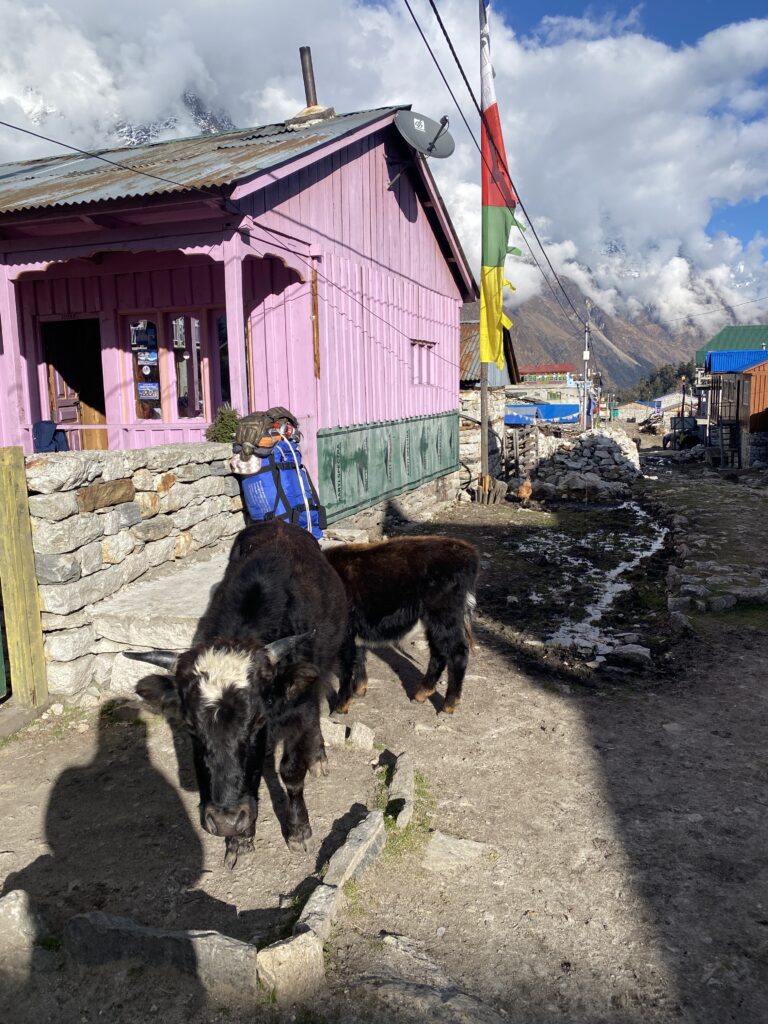
As amazing as the Manaslu Circuit was, I couldn’t shake a sense of guilt. For me, it was a once-in-a-lifetime adventure, a two-week escape into the mountains. For the locals, it’s a harsh, relentless reality. The freezing temperatures, the thin air, and the ever-changing terrain aren’t just temporary challenges but part of daily life. After speaking to the locals, I’m not sure everyone would choose it if they had the choice. During peak trekking season, some lodge owners sleep outside or on the dining room floor because tourists fill every bed. Guides and porters (those incredible people who carry the bags and supplies) often spend months away from their families, risking their lives for a living. It’s dangerous work, and yet it’s their livelihood. I will remember the moment my guide called home after we crossed the highest point, just to inform his family of his safety. I feel this action speaks volumes about the risks they face every single day.
By the sixth night, we were deep in the mountains, higher, colder, growing ever more lethargic. Yet during this environment the guides and porters took it upon themselves to sing and dance to local Nepali music to raise the spirits. It didn’t take long for everyone to be up on their feet dancing with infectious joy. There wasn’t much space in this dining room, and we had to dodge wooden tables and benches, but this didn’t matter with the energy that had been created inside of the teahouse. I love that music and dance exist in every culture all around the world and it’ll never fail to bring people together, even at 4000 meters above sea level. Their kindness didn’t stop there, these men would go above and beyond to make sure everyone was comfortable; filling water bottles with hot water, serving steaming plates of food, even offering massages to soothe aching muscles. They don’t just offer kindness, they have incredible strength to be summitting these mountains every day like it is nothing, often carrying huge packs sometimes weighing around 40kg. I silently noted every act of care and each gesture of concern, and promised myself that when the trek ended, I would tip as much as I could, not just for their hard work but for their humanity. The Nepali people embody hard work and perseverance in a multitude of ways.
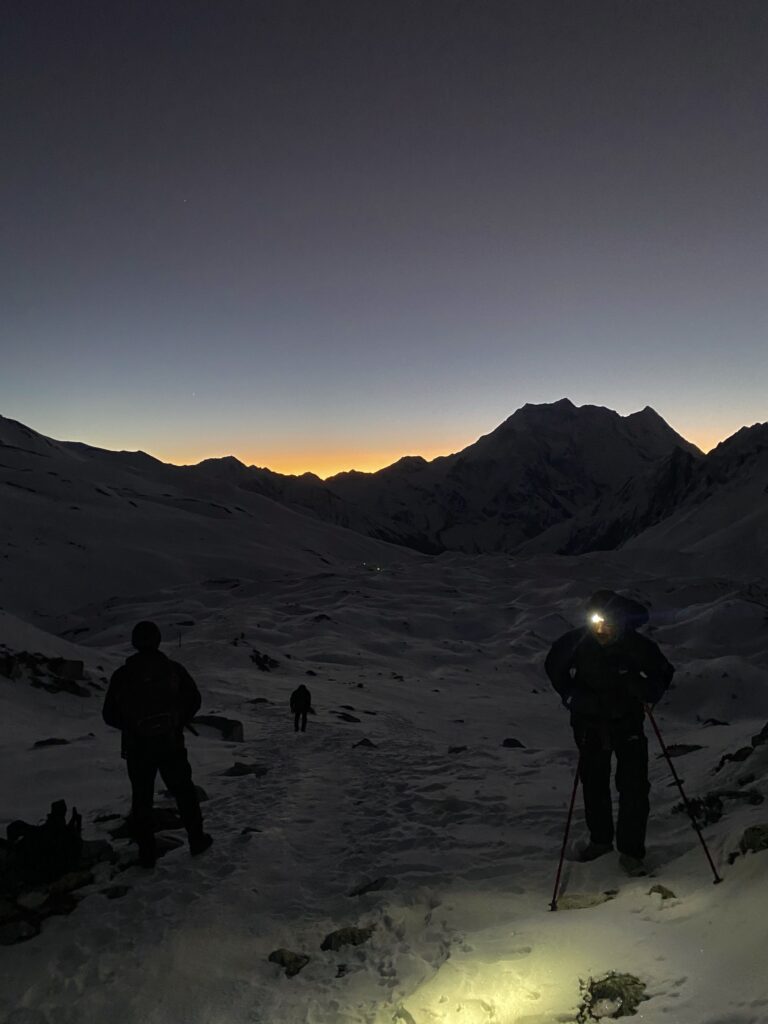
While the scenery is something, it’s the people who make these journeys unforgettable. One memory I hope stays with me forever is when I was hiking across the snow and ice at 4am to reach Larke Pass before sunrise and passing a small group of porters who were stopped for a break. As I breathlessly (and cautiously) put one foot in front of the other, out of the darkness came a shout: “Welcome to Nepal!” I had already been in the country for a few weeks, but this was the moment I felt I truly arrived. My exhaustion melted away and was replaced by pure appreciation.
The guides and porters are the unsung heroes – the backbone of every climb. Anyone who reaches these heights owes a debt of gratitude to the Sherpas and local guides who make it possible.
Lesson three: I can find myself in people all over the world.
This leads me on to my next point. Despite our huge differences in background, we’re not so different after all. These locals were born and raised on the other side of the world to me, they have lived through the hardship in the mountains, working tirelessly to provide to their families, and often they were older men. I couldn’t be more different to them, my experience of life couldn’t be further away – yet during these moments we are experiencing the same circumstances, and it was incredibly easy to connect. Harsh conditions bring people together.
We didn’t pass many people on the track during the day but no matter the pace, we all ended up in the same teahouse eventually. “Congratulations!” we’d cheer as someone walked in after a long day, sharing smiles, cups of tea, and genuine gratitude that we’d all made it safely. In these moments we really understood each other as for a second we were experiencing the very same emotions. To be seen is to be loved.
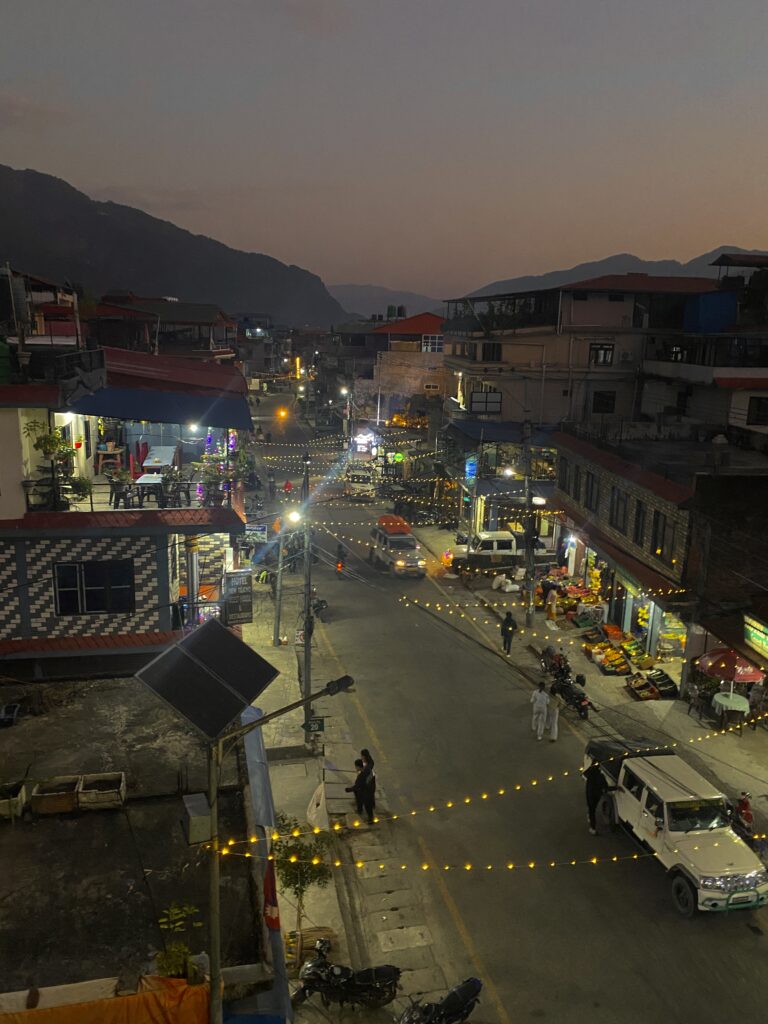
I had a similar experience of relatability once we had completed the trek and ended in a town called Besisahar. I made a throw-away comment about how I loved the authenticity of this town but really, I think I was talking about being able to see the community and the daily life of the individuals living here. Again, I found it fascinating that I could relate to them. There were school kids walking home in pairs or threes who would giggle or say hello when they saw us foreigners, I know me and my best friend would have acted the same way at their age. They were picking up snacks from the corner stores as the sun was slowly setting, still dressed in their school uniform. I remember doing that myself like it was yesterday. I have been them. We visited a snooker bar that night and I queued politely to order a drink; I watched as the grumpy bartender poured beers unenthusiastically, she clearly had had enough. She served a gentleman who was talking too loudly and had clearly had too much to drink. I have been her. I have been him. Back on the streets, an older lady sat peering down from her rooftop, watching the events of the evening unfold. I haven’t been her yet, but I’m certain it’s in my future. Here I was, halfway across the world in a place so unfamiliar finding familiarity all around me.
Our cultures, our norms, our language, are all vastly different to each other, but what we do share are our emotions. We know what it’s like to be human. Experiencing love, frustration, anticipation, disappointment, pride, and belonging. We are not that dissimilar at all. How can I feel alone when there are pieces of me in everyone I meet?
Lesson four: Community is key.
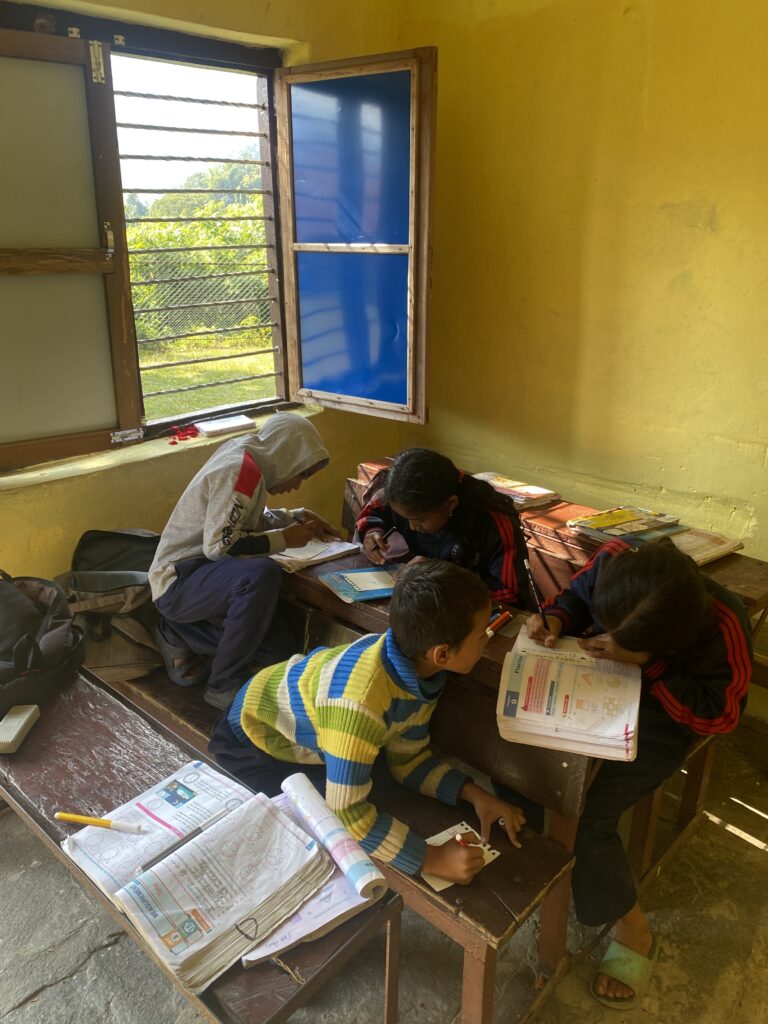
One part of my trip was meant for hiking, while the other was about giving back, volunteering and helping the local community in any way I could. As an English teacher, I thought I could contribute by assisting at the local primary school. It turned out they taught me just as much as I taught them. In fact, the teacher became the student.
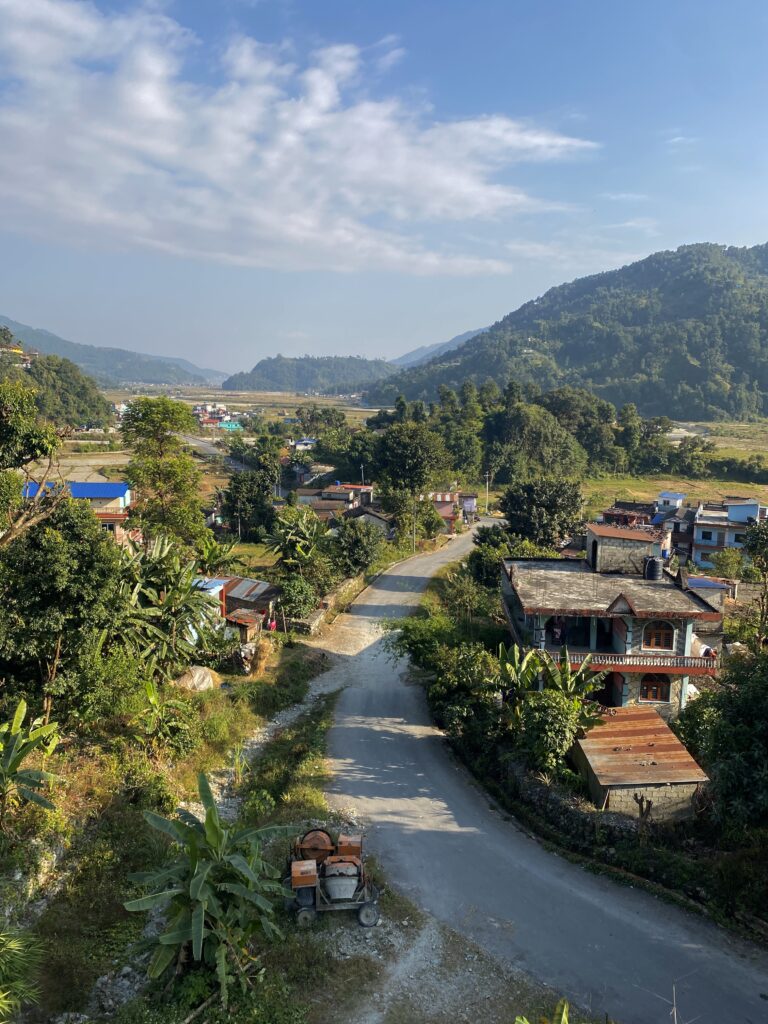
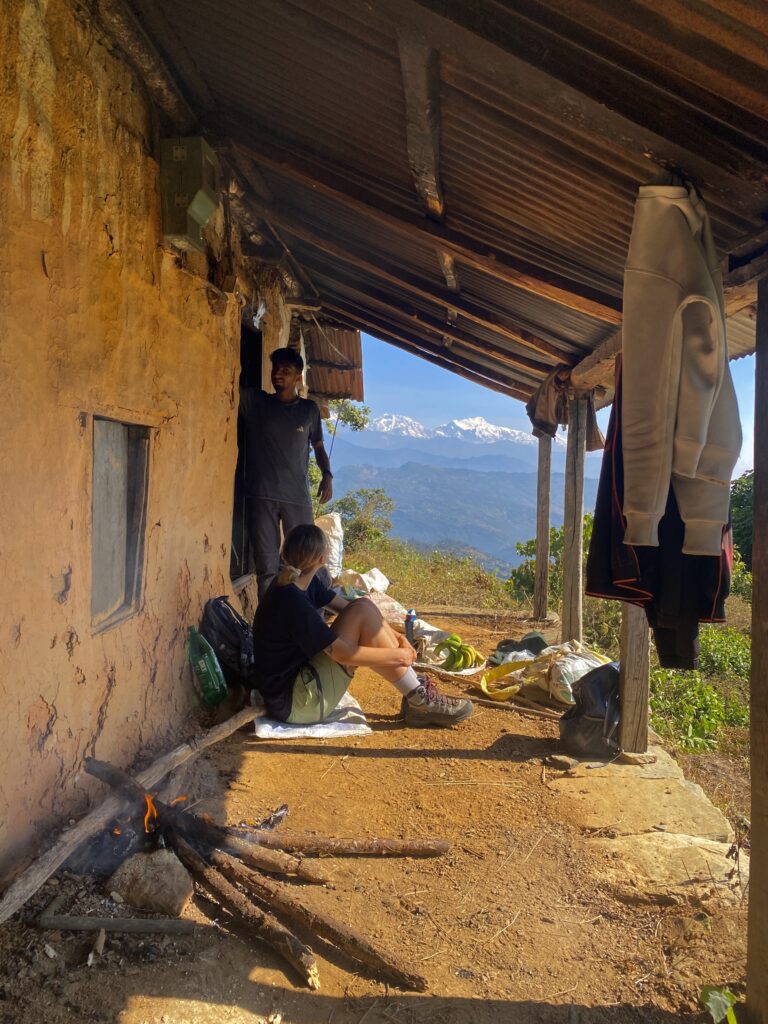
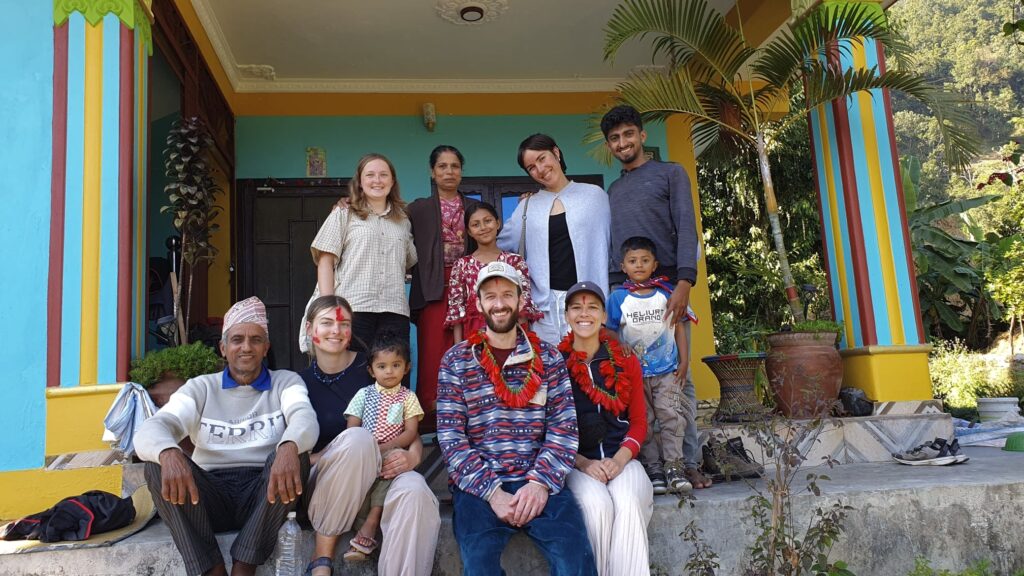
For this phase of the adventure, I stayed with Ankit, Shankar, and their family on their serene farm in a small village called Thulaket. At first, everything felt a little backwards, so different from life at home or anything else I had experienced before. But equally that was the beautiful thing, total immersion into Nepali culture. I wasn’t just learning about it or observing from the outside, I was living it. I followed their routines, walked the same streets, ate what they ate, and commuted to the school as they did. Even in the moment, I could feel how valuable the experience was. It filled me with curiosity and insight at the same time. They live so differently, and I believe there’s a lot we can learn from communities like this.
My newfound friend Shankar shared many stories about how the community here always come together to help one another. There are no supermarkets, the school has extremely basic facilities, and – like many rural villages around the world – money is scarce. Perhaps that’s why people will always step in if they can. He told me about a time when he cut his foot while ploughing the fields and couldn’t work on the family farm for at least 21 days. This was a big deal considering the farm is their livelihood. After a trip to the pharmacy, the local community reassured him not to worry. During those three weeks of being bedbound, the village planted his seeds, ploughed his fields, and even took his produce down to Pokhara (the nearest town) all without expecting anything in return. Of course, if the roles were ever reversed, he would do the same them.
It’s not just farming; this generosity impacts every part of daily life. Ankit supplies resources to the school with the knowledge that other parents might not be able to provide these things as easily for their children. Festivals are celebrated collectively, everyone contributes food, time, and effort so no one is left out. People call each other by family terms like brother, sister, uncle as that relationship is the most important thing. They called me Didi, meaning sister, and that simple word made me feel like part of their family.
This experience made me reflect on privilege and what that word truly means. It’s easy to say western countries come with a privilege, of course we have free healthcare, education for all, travel opportunities and these are undeniable benefits that I am both aware of and grateful for. I fully acknowledge this. However, this privilege doesn’t mean we are better, nor that people from other countries would want to trade what they have. These neighbourhoods are so blessed in community, happiness and satisfaction. In Thulaket, they are rich in ways money can’t buy.
Wherever you travel in the world I would always recommend staying with a local family to understand the country better. To stay with Ankit and help on his farm you can message him on WhatsApp or Instagram @ankit.farm.stay or reach out to me for more details.
Lesson five: Things always have a strange way of working out in the end.
Six weeks in Nepal was the perfect amount of time to do everything I set out to. I was able to complete two different multi-day hikes spending upwards of three weeks trekking in the Himalayas, live with a local family volunteer teaching English and working on the farm, visit Kathmandu, Pokhara, and all the touristy sights, and meet a bunch of lovely people both Nepali and international alike. All this yet I still could have stayed longer. I am so grateful.
Upon returning home there was a packaged tube placed lovingly on my bed, for a second, I had no idea what this parcel could be. Then it clicked. I cautiously unwrapped this well sealed container, slowly peeling off the thick brown tape. On the label was my address, and a large stamp from Nepal. Inside was the painting, the one I had wished to never see again, the one that (at the time) had made me bankrupt and miserable. But now, I couldn’t help but grin. I was so happy to lay my eyes on this artwork again. This painting encapsulated my journey; I was staring at the very same piece of art I had my eyes laid on only a matter of weeks earlier, yet the feelings evoked couldn’t be more distant. I had started with severe uncertainty and ended with upmost confidence. Confident in my abilities to have the most amazing adventures all on my own. Confident in my belief that the Nepali people, are indeed, some of the nicest people you will ever meet. And confident in my love for this incredible country that seems to have it all. I would always rather travel with imperfection knowing that I have done it all myself.
Keep adventuring.
Peace and love, Evie xxx
The way write is just so beautiful. I always love reading about your adventures, but this one really was something else. Being able to take any situation and look at it in such a positive way shows who you are as a person. I’m so proud of you. I Loved loved loved this post.